What to Keep in Your Car for Emergencies: A Printable Checklist by Season
The basics every car needs all year, what to add when it gets cold or hot, where each item goes, and the twice-a-year check.

All year, keep jumper cables, flares or a reflective triangle, a flashlight, a first aid kit, a phone charger, water, snacks, a blanket and a paper map. In winter add a shovel, an ice scraper, sand or cat litter and warm layers for everyone. In summer add extra water, and take lithium batteries and aerosol cans out of the hot car.
Ready.gov puts it simply: in case you are stranded, keep a kit of emergency supplies in your car. Most of us never get past a pair of jumper cables.
Here is the official list in one printable checklist, sorted by season, with where each item belongs so it is within reach on the day you need it.
In this guide
- What should you keep in your car for emergencies?
- Where should you keep each item in the car?
- What to add to your car for winter
- What to add in summer, and what not to leave in a hot car
- Extras for families with kids or older parents
- Car emergency kit by season
- How often should you check your car emergency kit?
- Start with the all-year basics, then add the winter or summer items as the season changes.
- The escape tool goes on your keys, warmth in the cabin, heavy gear in the trunk.
- Lithium batteries do not belong in a hot car, says the U.S. Fire Administration.
- Check the kit twice a year, when the clocks change.
What should you keep in your car for emergencies?

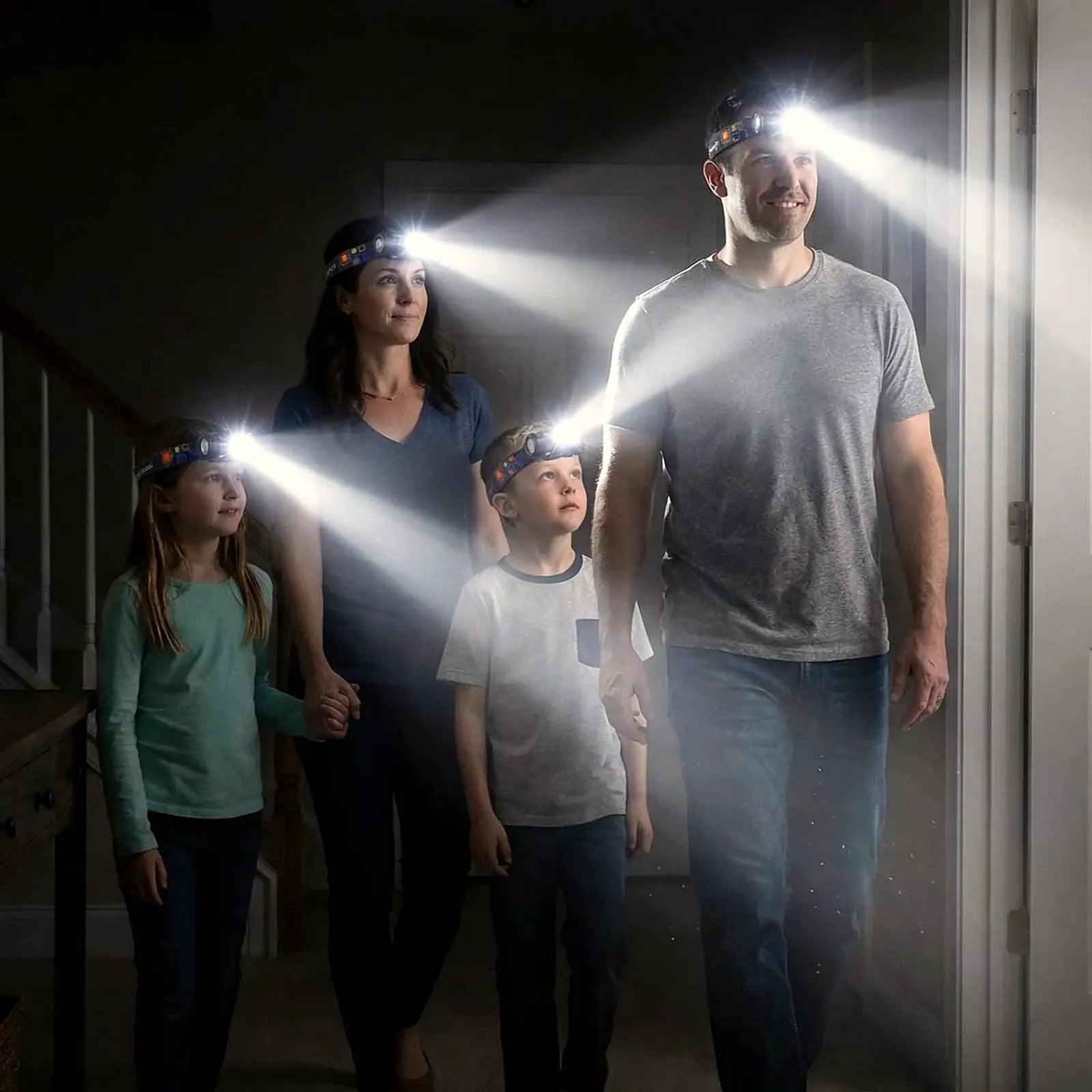
Ready.gov lists the core: jumper cables, flares or a reflective triangle, an ice scraper, a car phone charger, a blanket, a map and cat litter or sand for traction. The National Weather Service adds a flashlight with spare batteries, a first aid kit, food and water.
All-year car emergency kit
Where should you keep each item in the car?
A kit only helps if you can reach it. What you need in the first minute goes up front. The rest goes in the trunk.
 Step01
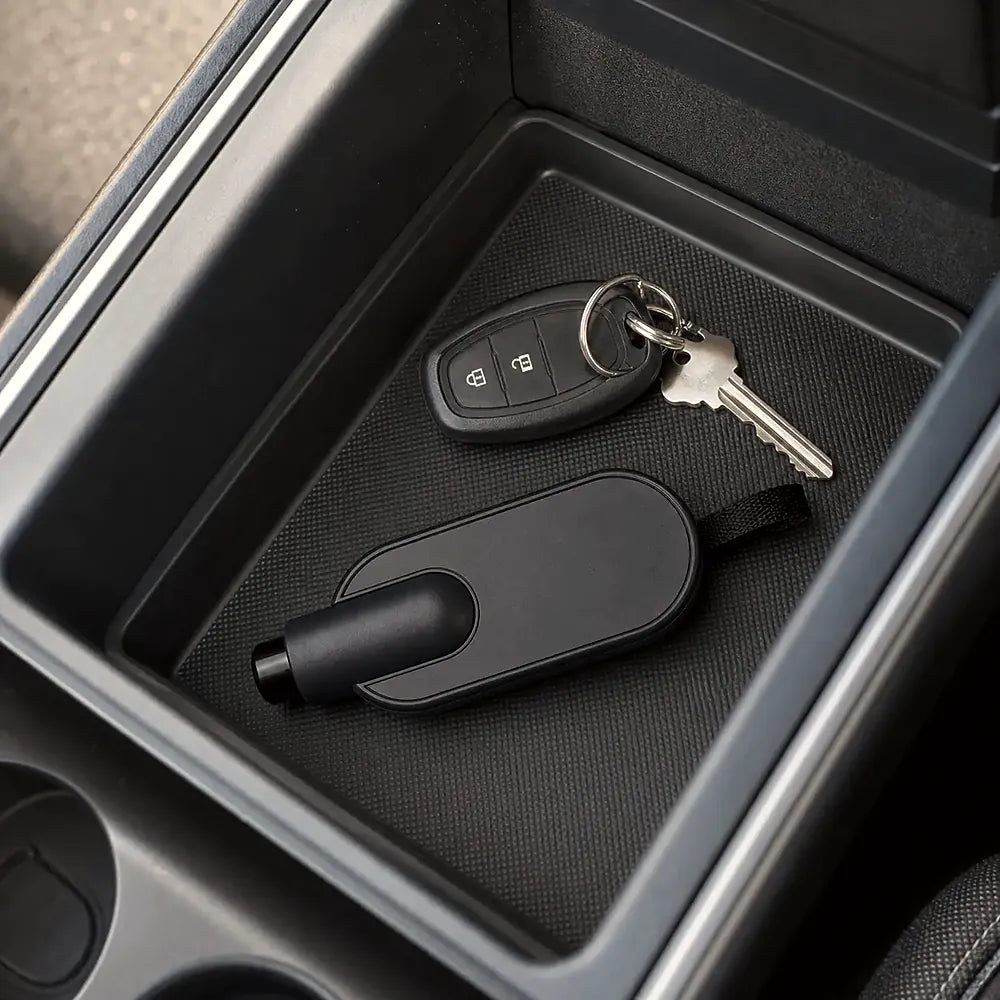
On your keys: the escape tool
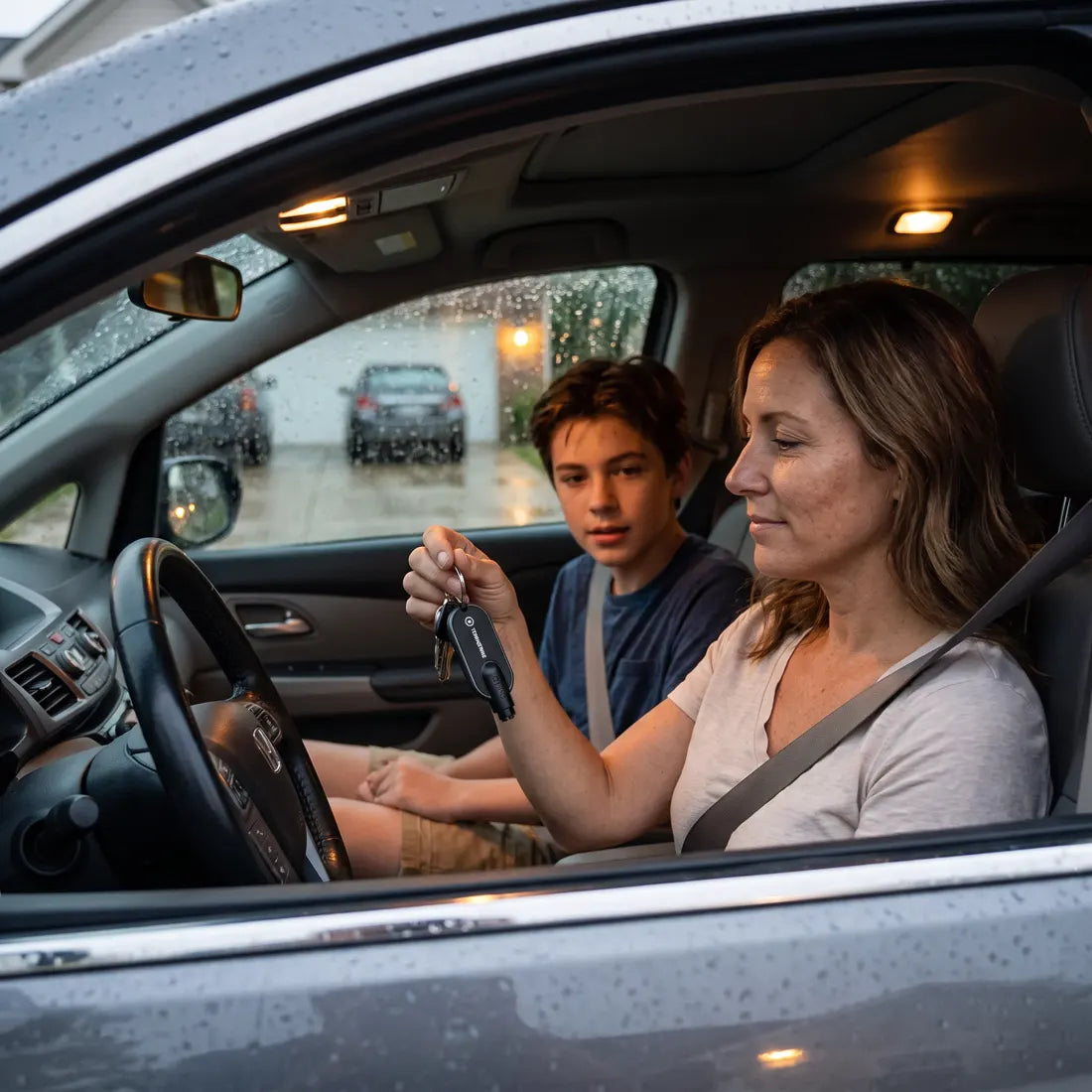
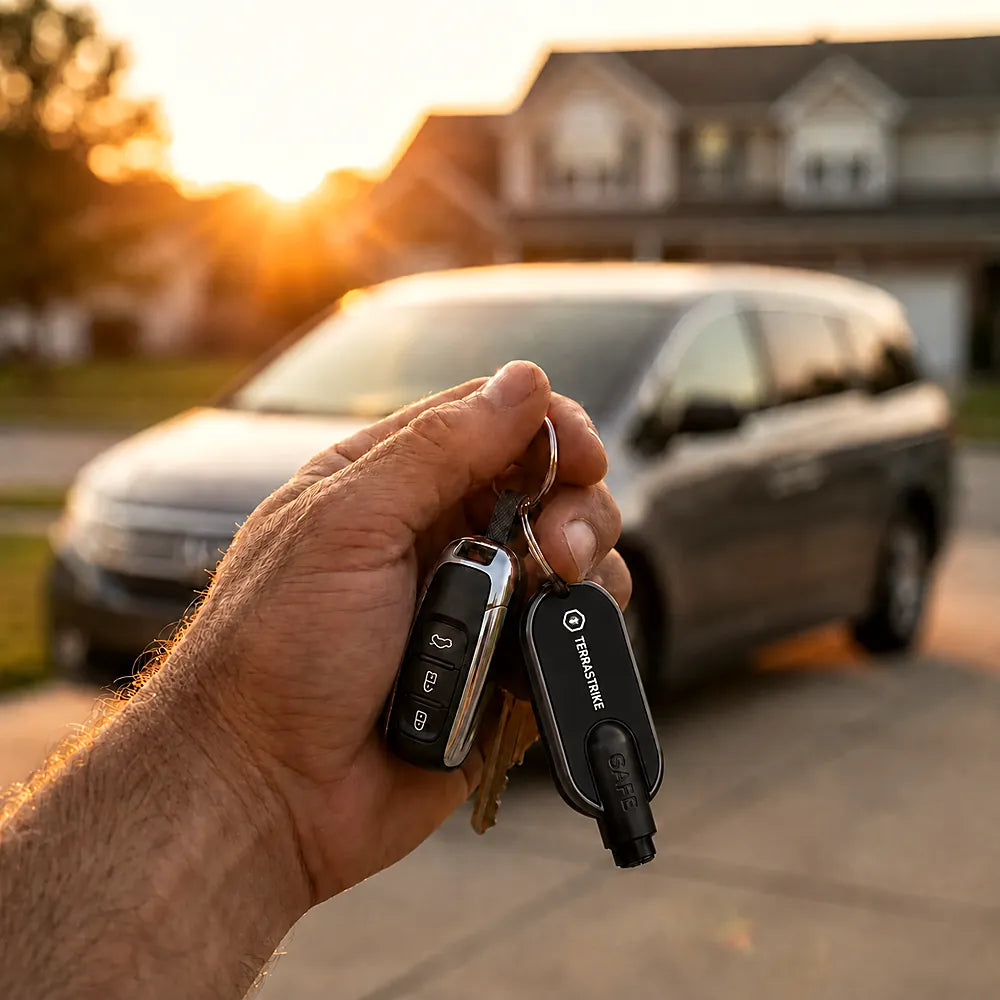
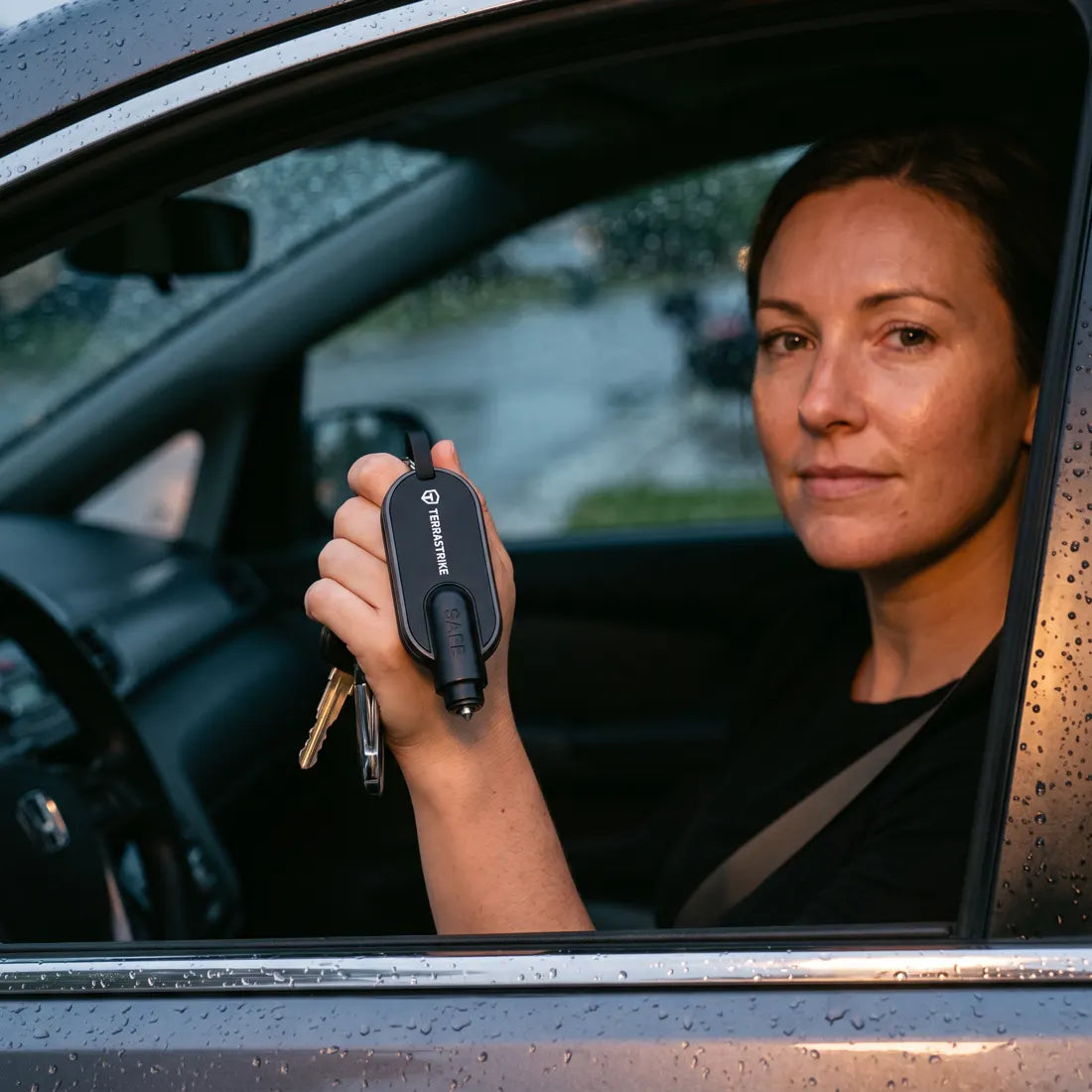
After a crash a door can jam and a belt can lock. Keep a window breaker with a seatbelt cutter on your keys or in the console, never in the trunk. Read how to break a car window once.
 Step02
In the glovebox: light and signal
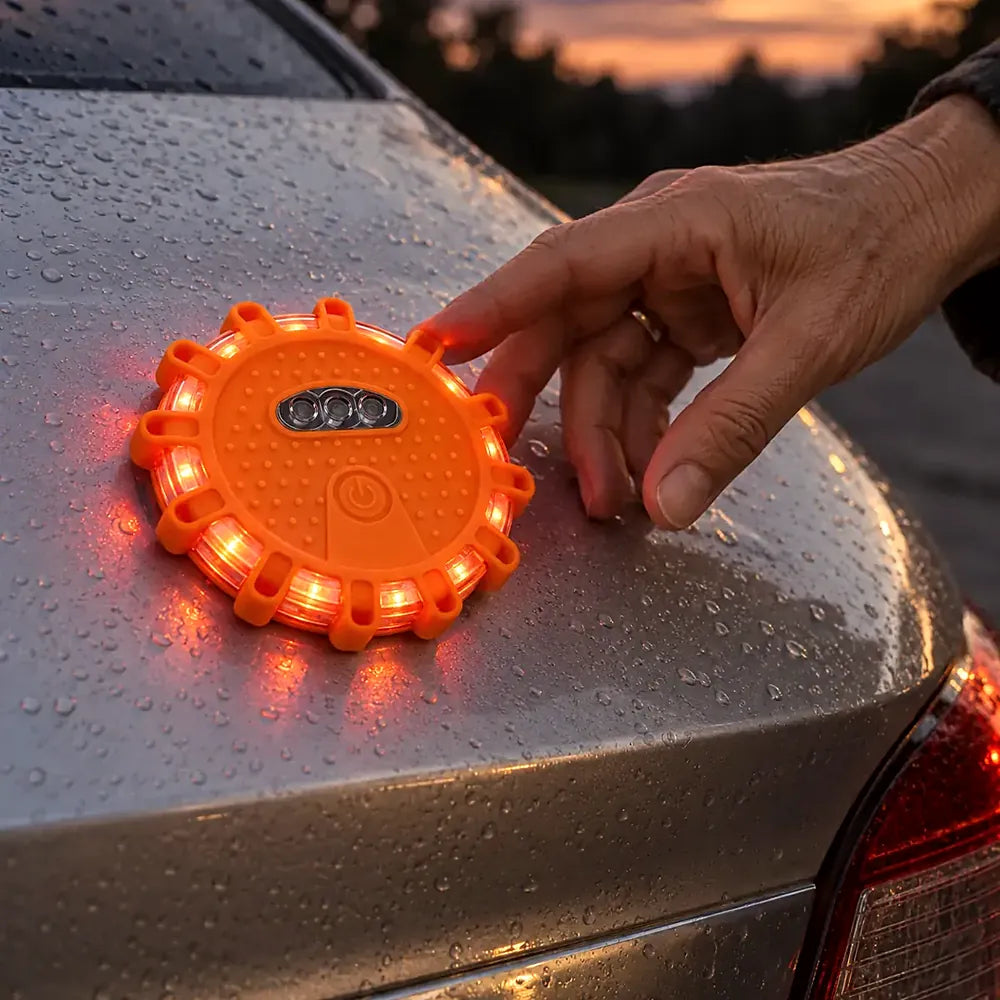
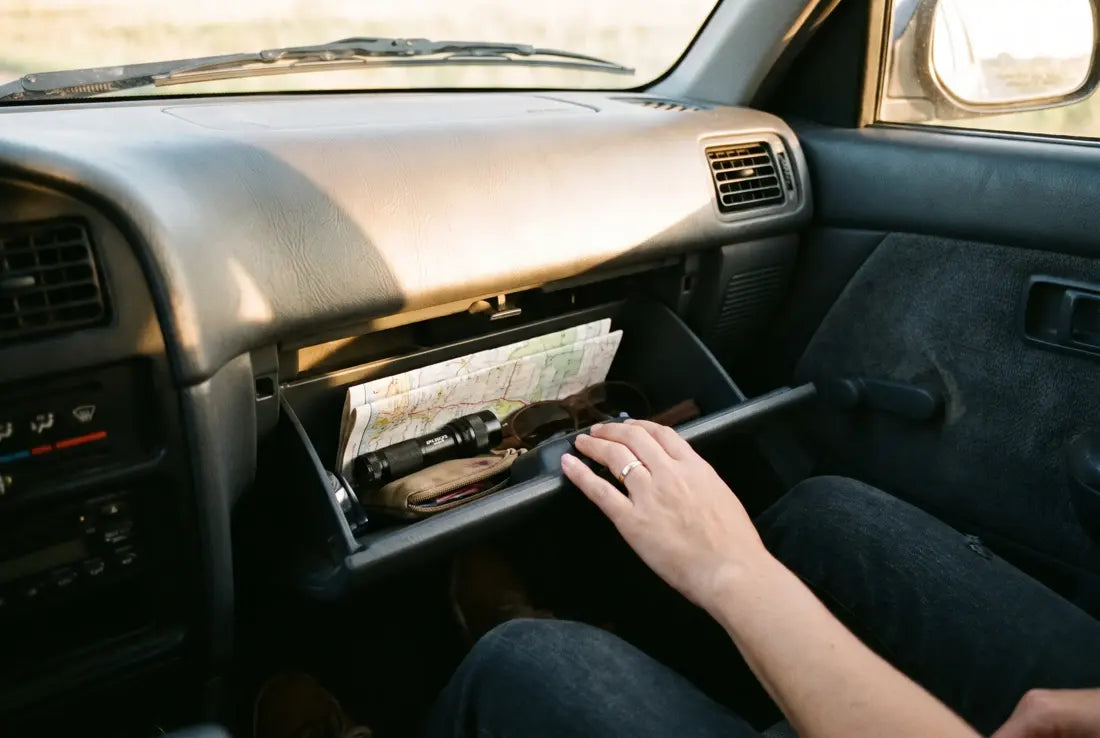
Flashlight, phone cable, paper map and road flares: the things you grab before you step out on the shoulder.
 Step03
In the cabin: warmth
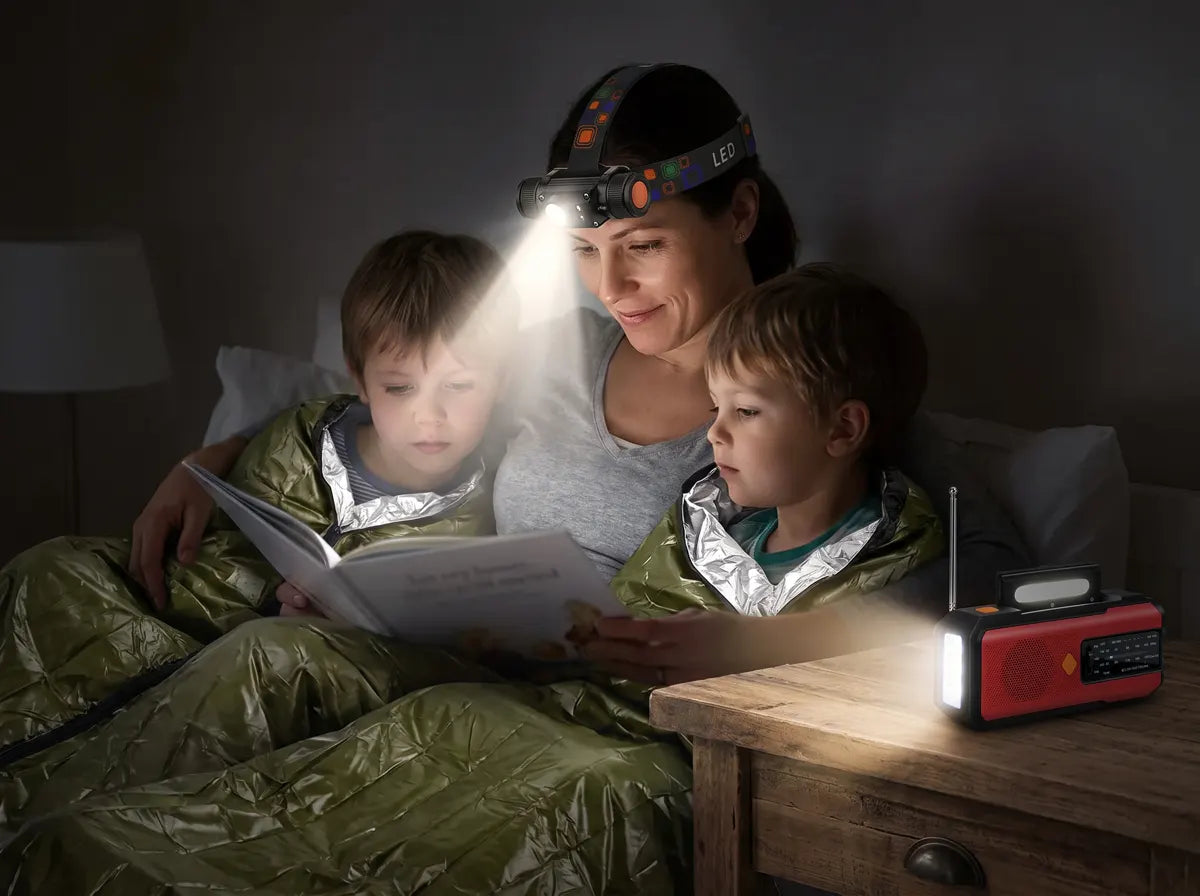
Blankets or emergency sleeping bags go in a seat-back pocket or under a seat, so you can reach them without going outside in snow.
 Step04
In the trunk: the heavy gear
Cables, first aid kit, water, tools, shovel and sand go in a bin strapped down, so nothing flies forward in a hard stop.
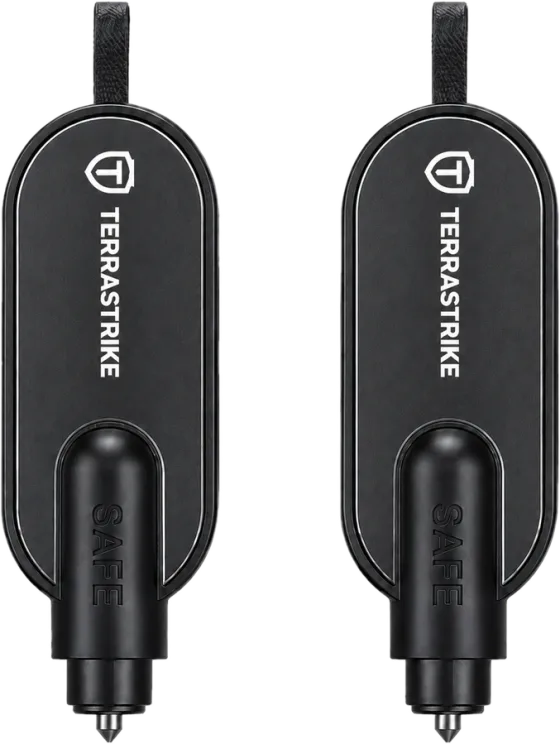
TerraStrike, 2-pack
The one item that must live on your keys: a spring-loaded window breaker with a hidden seatbelt cutter, no arm strength needed.
$39.90 · 120-day money-back guarantee
See how it worksWhat to add to your car for winter

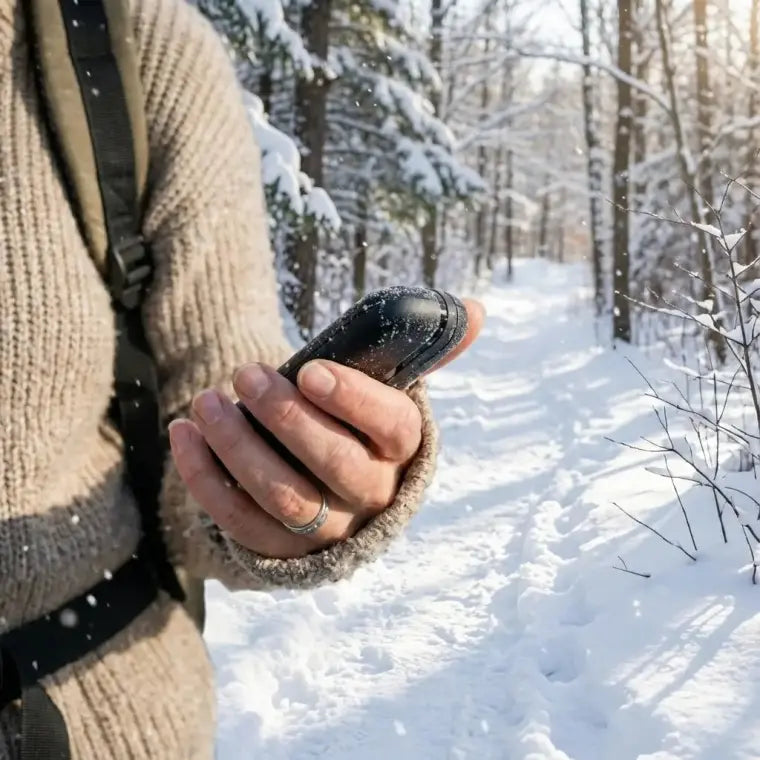
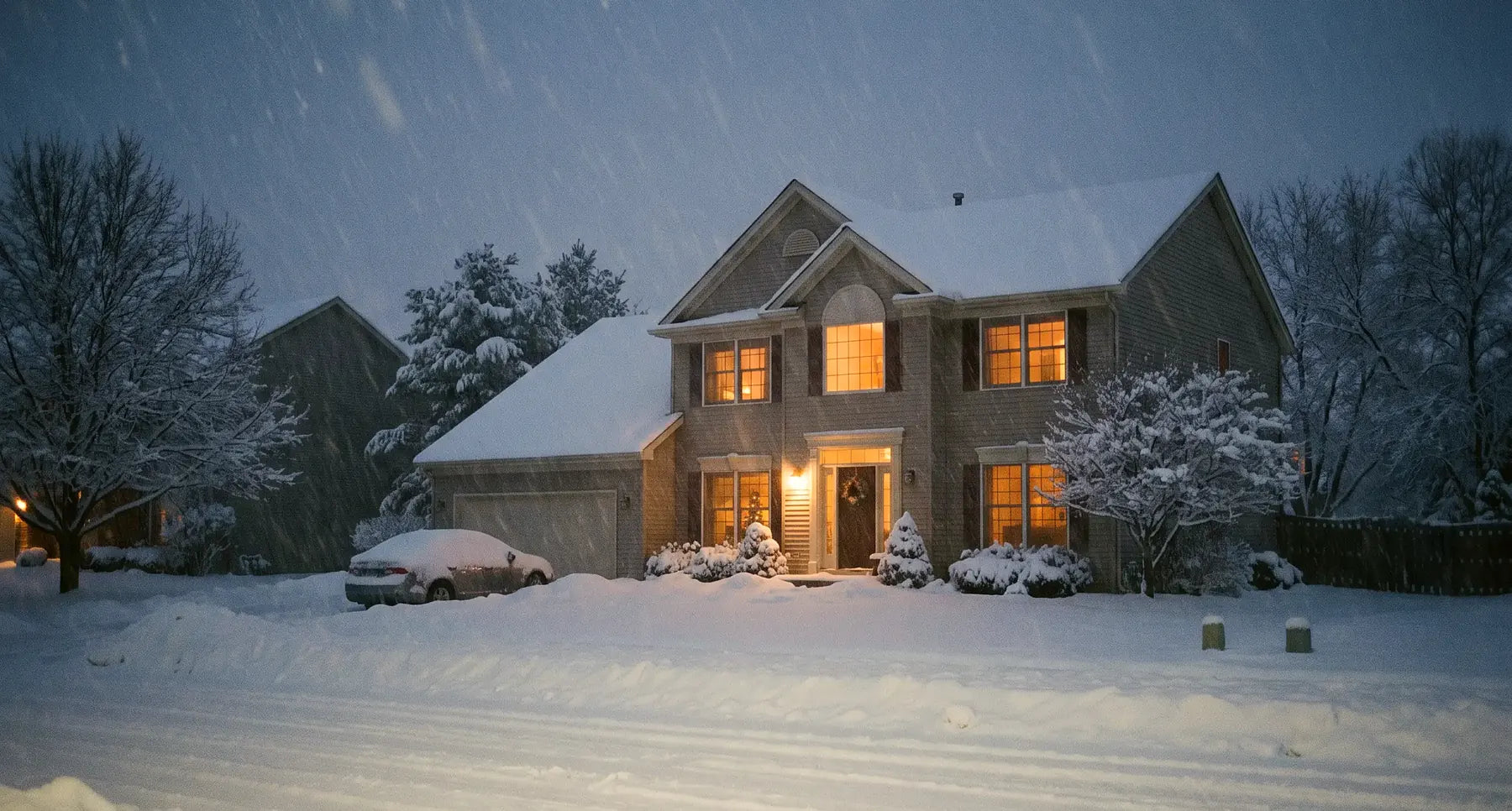
The National Weather Service says more than 5,000 people are killed each year in weather-related vehicle crashes. It advises winterizing the car before the season and keeping the gas tank mostly full, so ice does not form in the fuel lines.
Winter car kit add-ons
If you get stuck in snow
- Stay in the car. Blowing snow can disorient you fast.
- Run the engine about 10 minutes each hour for heat, with a window cracked.
- Keep the exhaust pipe clear of snow to prevent carbon monoxide poisoning.
- Be visible: dome light on at night, a bright cloth on the antenna or door.
Full plan: what to do if you are stuck in your car in snow.
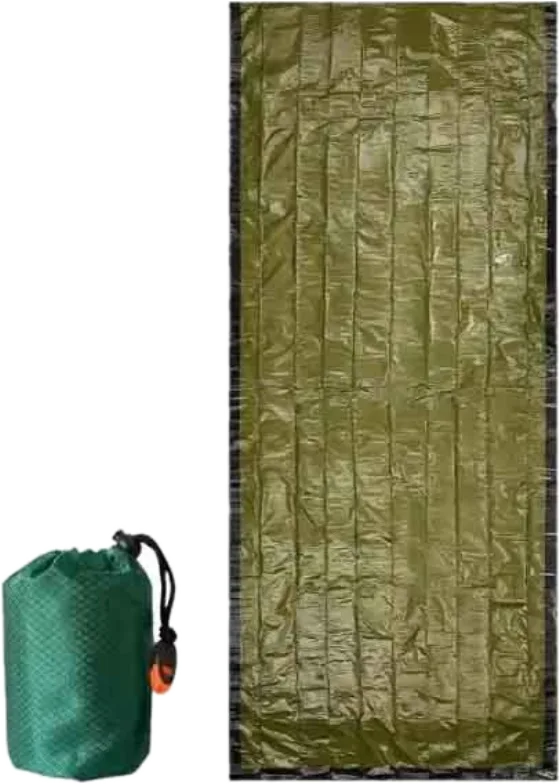
TerraShell Emergency Sleeping Bag
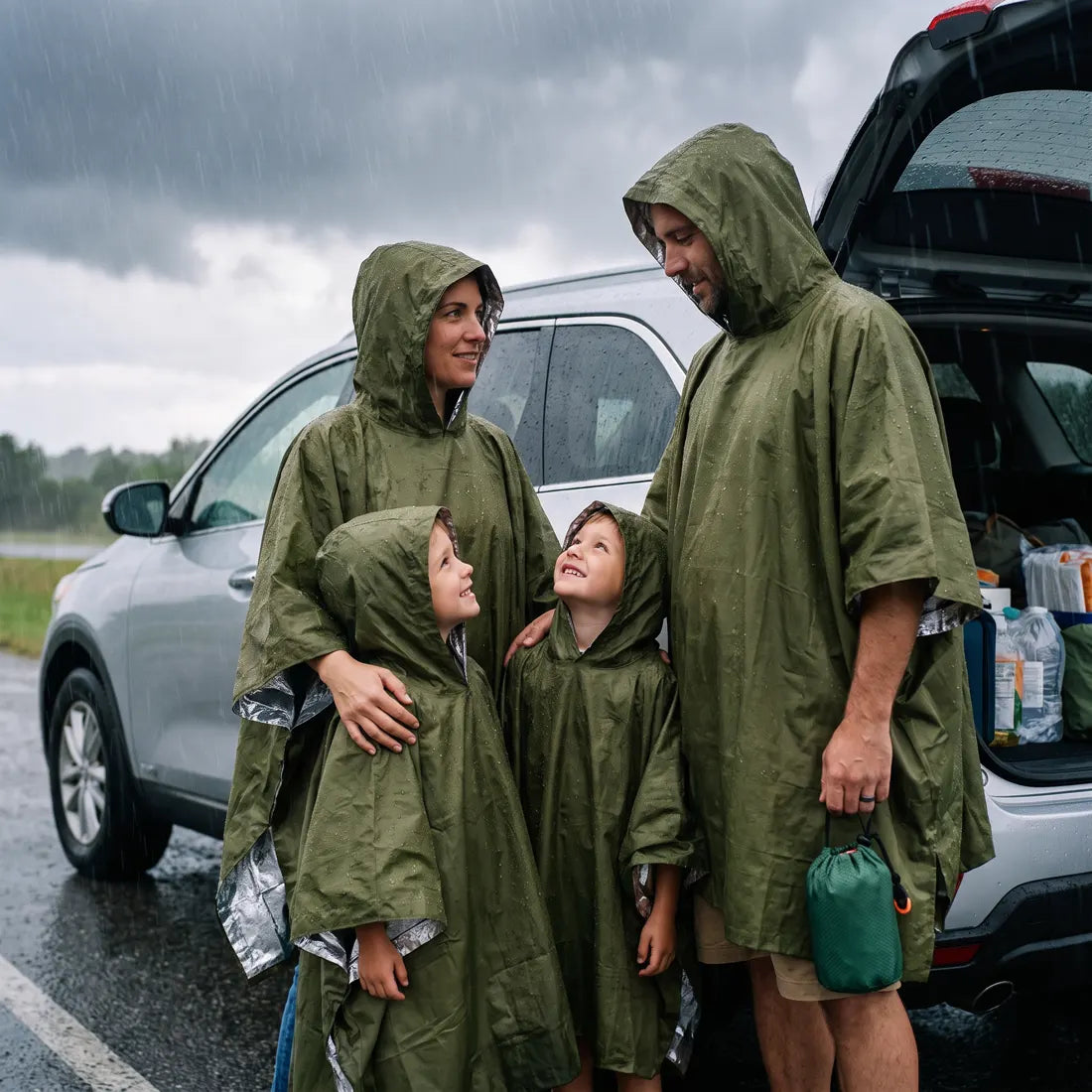
Warmth that fits in a seat pocket: about 4 ounces, smaller than a soda can when packed, with a built-in whistle. Keep one per seat.
$39.00 · 120-day money-back guarantee
See how it worksWhat to add in summer, and what not to leave in a hot car

In summer the risk is heat. Add extra water, sunscreen, a hat and a windshield sunshade.
Do not keep lithium-ion batteries in a hot car. The U.S. Fire Administration warns that direct sunlight and hot cars are a fire risk for them. Stop using any battery that smells, changes shape, leaks or gets too hot.
- Power banks and spare batteries: bring them inside on hot days, or keep them in the shade.
- Aerosol cans (tire sealant, spray sunscreen, bug spray): follow the heat warning on the label.
- Medicines: check the label for the storage temperature and carry them in your bag.
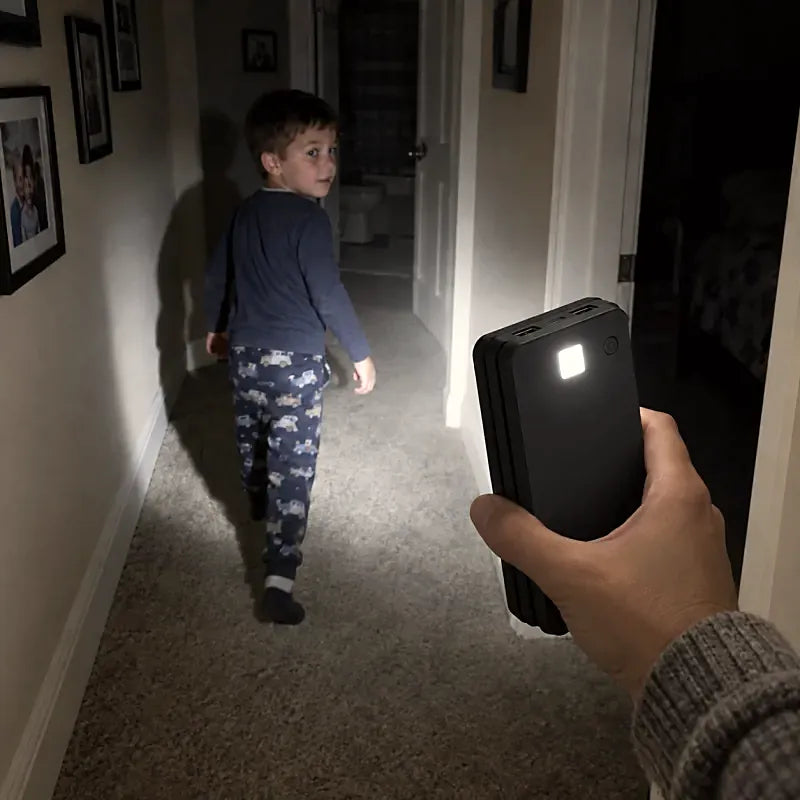
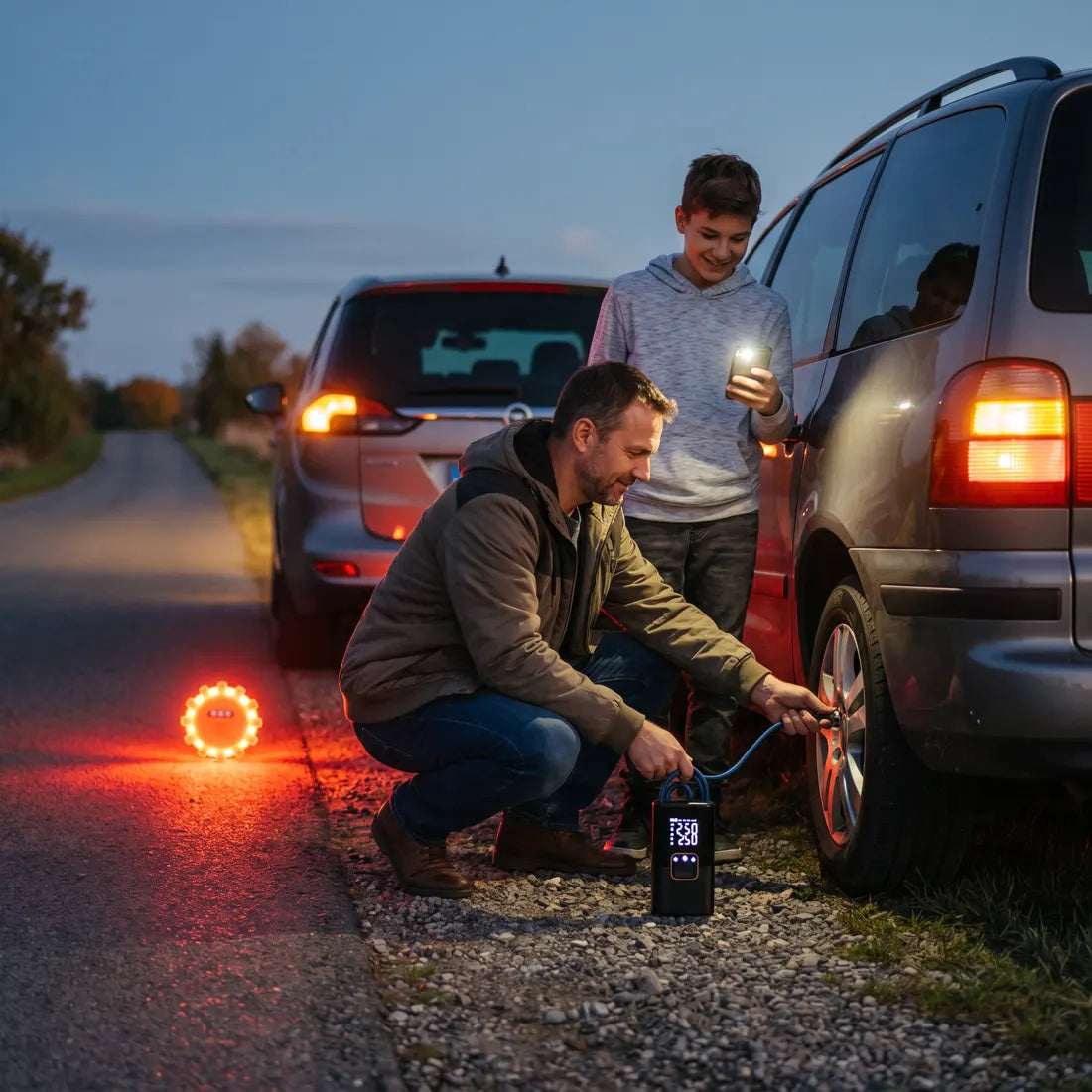
Charge rechargeable car gear (flares, power bank, tire inflator) indoors at room temperature when you check the kit, then put it back in a shaded spot.
Extras for families with kids or older parents

Ready.gov advises updating your kit as your family's needs change. In the car, keep a small labeled bag for the people who depend on you:
- Kids: diapers, wipes, formula or bottles, snacks, a change of clothes and a small toy.
- Older parents: a few days of medicines with a written list of doses, spare glasses and hearing aid batteries, an extra blanket.
- Everyone: family and doctor phone numbers on paper, in case the phone dies.
Car emergency kit by season
| Season | Add these | Watch out |
|---|---|---|
| All year | Cables, flares or triangle, flashlight, first aid, water, snacks, blanket, map, window breaker | Breaker on your keys, not in the trunk |
| Winter | Shovel, scraper, sand or cat litter, warm layers, sleeping bags, extra food | Keep the gas tank mostly full |
| Summer | Extra water, sunscreen, hat, sunshade | Lithium batteries and aerosols out of the hot car |
| Kids or parents | Diapers and formula, medicines, glasses, extra layers | Check medicine dates |
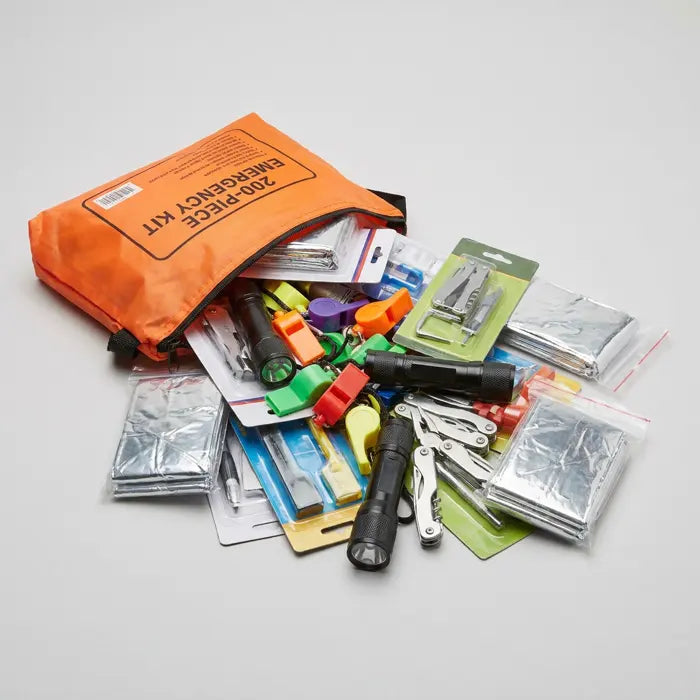
Prefer a ready-made set? See our roadside emergency kits.
How often should you check your car emergency kit?

Twice a year. Ready.gov advises replacing expired items as needed. Tie it to the clock change in March and November, and you swap the seasonal gear at the right time:
- Test the flashlight and charge everything rechargeable.
- Replace water, snacks and expired medicine.
- Swap the seasonal gear, and check tire tread and pressure.
For your home, use our emergency preparedness checklist.
Frequently asked questions
What should I keep in my car for emergencies?
Jumper cables, flares or a reflective triangle, a flashlight, a first aid kit, a phone charger, water, snacks, a blanket, a paper map and a window breaker within reach.
What should be in a winter car emergency kit?
Add a shovel, an ice scraper, sand or cat litter, warm layers, blankets or sleeping bags for everyone and high-calorie food.
What should you not keep in a hot car?
Spare lithium-ion batteries and power banks, aerosol cans with a heat warning on the label, and medicines.
Where should I keep a window breaker?
On your keys or in the console, within the driver's reach. Never in the trunk.
How often should I check my car kit?
Twice a year. The clock changes in March and November are easy reminders.
- Keep the all-year basics, and add winter or summer items as the season changes.
- Escape tool on your keys, warmth in the cabin, heavy gear in the trunk.
- Take lithium batteries and aerosols out of a hot car.
- Check the kit when the clocks change.
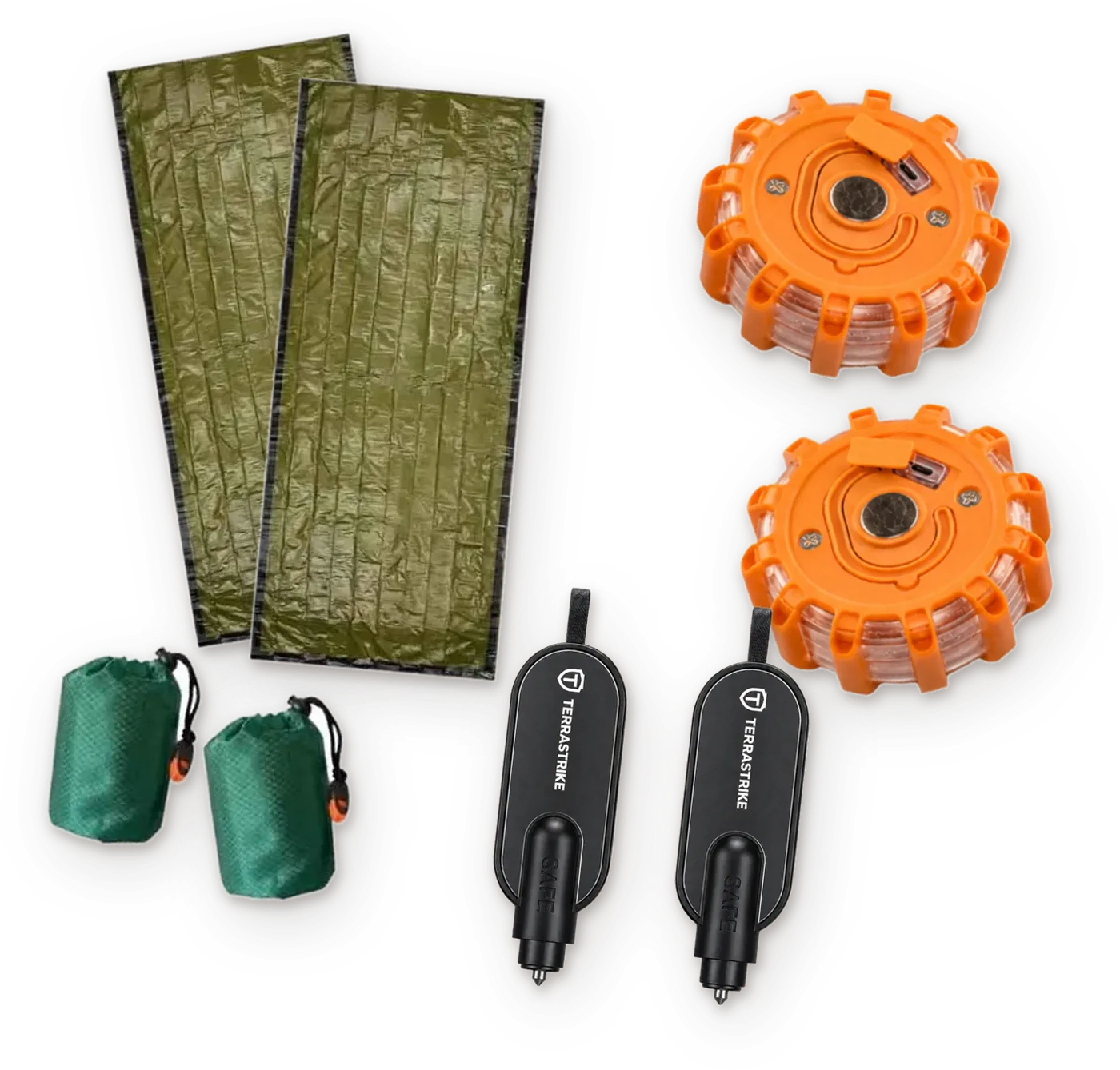
The Family Car Kit
A 2-pack of window breakers, two rechargeable road flares and two emergency sleeping bags: a way to get out, a way to be seen and a way to stay warm, in one box.
See the kitMore guides for your family
 What Is a NOAA Weather Radio, and Do You Need One?
 Stuck in Your Car in Snow: How to Stay Safe and Warm Until Help Comes
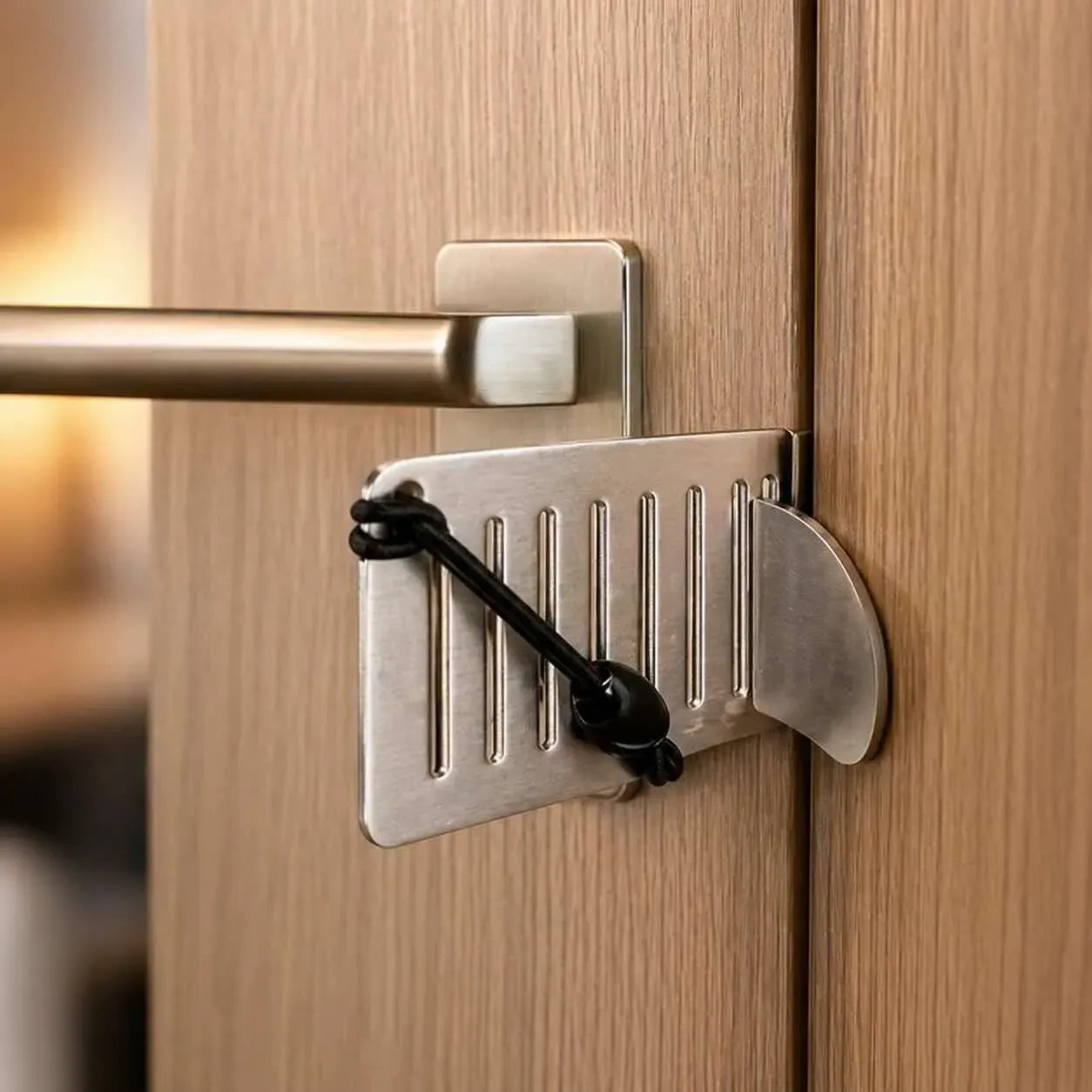
 How to Secure a Hotel Room Door When You Travel

We write plain-English safety guides for families, checked against the official sources listed above. Trusted by 60,000+ families.



 ×
 ×
 ×
 ×