What Is a NOAA Weather Radio, and Do You Need One?
The government radio network that keeps talking when the power, the internet and the cell towers go quiet, and how to make one wake you up for a warning in your county.

A NOAA Weather Radio is a radio that picks up NOAA Weather Radio All Hazards, a nationwide network of more than 1,000 transmitters run by the National Weather Service. It broadcasts warnings, watches and forecasts 24 hours a day on 7 frequencies between 162.400 and 162.550 MHz. A receiver programmed with your county's SAME code sounds an alarm only for alerts in your area, even at night with the volume off. Because it is plain radio, it does not need cell service or the internet.
When a tornado warning comes at 2 a.m., the first question is simple: will anything in the house wake you up? Phones can be on silent, dead or out of signal.
That is the job of a NOAA Weather Radio. The National Weather Service calls this network the "Voice of NOAA's National Weather Service", and Ready.gov puts a NOAA Weather Radio with tone alert on its basic emergency kit list. Here is how it works, how to set one up and which kind to buy.
In this guide
- NOAA Weather Radio broadcasts straight from your nearest National Weather Service office, 24/7, in all 50 states.
- There are only 7 frequencies, 162.400 to 162.550 MHz. Regular AM/FM radios cannot pick them up.
- The SAME code is the key setting. Program your 6-digit county code and the radio alarms only for your area.
- For an alarm that wakes you, buy a receiver with the Public Alert logo. For listening in a long blackout, a hand crank radio with the weather band keeps going without batteries.
What is a NOAA Weather Radio?

NOAA Weather Radio All Hazards (NWR) is a network of radio stations that broadcast weather information directly from the nearest National Weather Service office, around the clock. It has more than 1,000 transmitters serving all 50 states, nearby coastal waters, Puerto Rico, the U.S. Virgin Islands and the U.S. Pacific Territories.
A "NOAA Weather Radio" is the receiver in your home that tunes in to those stations. It can be a tabletop alert radio, or a multi-band radio (like a hand crank emergency radio) with a weather band next to AM and FM.
You need a special receiver. The broadcasts go out on VHF frequencies that an ordinary AM/FM radio cannot pick up.
How does a weather radio work?

The 7 weather radio frequencies
Every NWR station uses one of 7 frequencies (in MHz): 162.400, 162.425, 162.450, 162.475, 162.500, 162.525 and 162.550. Your radio needs to be set to the one your local transmitter uses. Reception typically reaches about 40 miles from the transmitter on level ground; hills and mountains can block it.
SAME codes: alerts for your county only
Each warning carries a digital code called SAME (Specific Area Message Encoding). A radio programmed with your 6-digit county code turns on for alerts in your area and ignores the rest.
- First digit: 0 means the whole county; another number means only part of it.
- Digits 2 and 3: your state or territory.
- Digits 4 to 6: your county.
The alert tone
Before most warnings and many watches, the station sends a 1050 Hz alarm tone. On a receiver with this feature, the alarm sounds even when the audio is muted, which is why the NWS calls it especially useful at night.
What alerts does NOAA Weather Radio carry?
Besides weather, it works with the Emergency Alert System to carry non-weather emergencies:
- Weather: warnings, watches and forecasts from your local NWS office.
- Natural hazards: the NWS lists earthquakes and avalanches.
- Environmental: chemical releases and oil spills.
- Public safety: AMBER alerts and 911 telephone outages.
Why it still works when the power and cell service are down

A weather radio is a one-way broadcast, the same way a car radio works. It does not use cell towers, Wi-Fi or the internet. As long as your receiver has power and you are in range of a transmitter, you hear the station.
That is why power matters more than anything else. The NWS says a battery backup keeps the radio working when the power goes out. A hand crank or solar radio goes one step further: it makes its own power, so a long outage does not leave you with dead batteries. For the rest of the plan, see what to do when the power goes out.
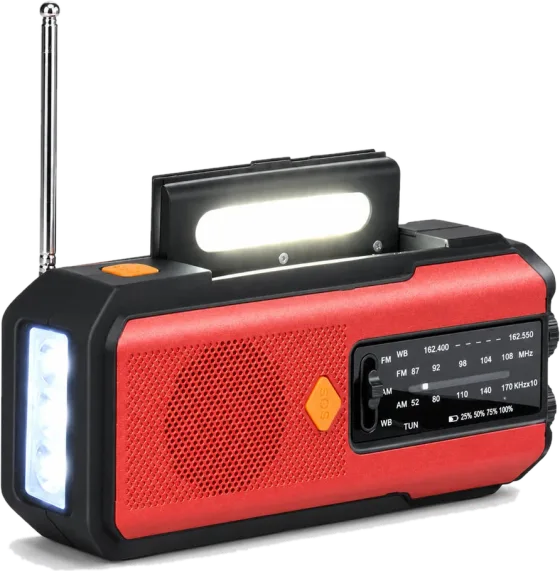
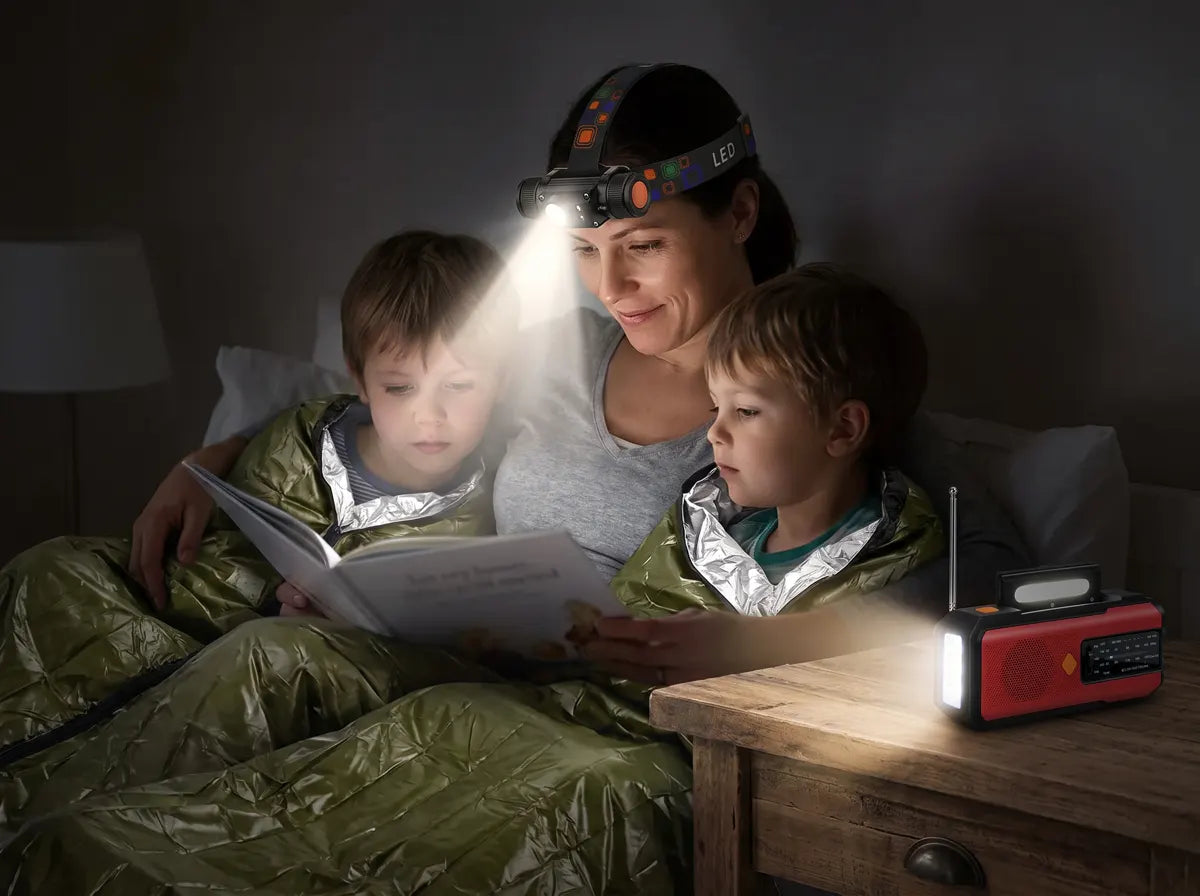
TerraWave
AM, FM and the NOAA weather band to follow the broadcasts in a long blackout, charged by hand crank, sun or USB-C, and it charges your phone too.
$129.95 · 120-day money-back guarantee
See how it worksHow to set up a NOAA Weather Radio, step by step
Setting up an alert radio takes four steps. Keep the user manual handy, because the buttons differ from model to model.
 Step01
Find your station and frequency
Use the NWS "Find My Station" tool at weather.gov/nwr to see which transmitter serves your county and its frequency. Pick the station listed for your county, not just the loudest one.
 Step02
Program your county SAME code
Look up your 6-digit code on the NWS county listing, or call 1-888-NWR-SAME (1-888-697-7263) and follow the voice menu. Enter it as your manual shows. Add the code of a neighboring county too if storms usually come from that side.
 Step03
Set the alert mode and check the battery
Switch the radio to alert mode so it stays quiet until a warning comes. Put in fresh backup batteries and place the radio where you will hear it at night, like the bedroom.
 Step04
Listen for the Wednesday test
NWS stations normally test the alarm every Wednesday between 10 a.m. and noon local time (moved to the next good-weather day if storms threaten). If your radio alerts with a test message, you are set.
Do not switch to a louder or clearer station that is not set up for your county. The NWS warns you will not receive your alerts.
If reception is weak, try another spot in the house and pull out the antenna. Many receivers also have a jack for an external antenna.
What to look for when you buy a weather radio

The NWS does not endorse brands, but it does say which features matter. First decide what the radio is for:
| Type | Best for | Keep in mind |
|---|---|---|
| Standalone alert radio with the Public Alert logo | Waking you for warnings day or night, automatically | Needs backup batteries |
| Hand crank or solar multi-band radio with a weather band | Listening to forecasts and news in a long blackout | You tune in yourself |
| Phone alerts (Wireless Emergency Alerts) | Alerts wherever you carry your phone | Older phones may miss them; a dead phone gets nothing |
Weather radio buying checklist
A strong setup is both: an alert radio by the bed that wakes them, and a crank radio in the power outage kit for the days without electricity.
Who needs a NOAA Weather Radio most?

Anyone can benefit, but it matters most for:
- People in tornado, hurricane and winter storm areas, where warnings often come at night.
- Rural homes with weak cell signal.
- Older adults and anyone who sleeps with the phone off or on silent.
- People who are deaf or hard of hearing, using a radio with a strobe or bed shaker.
Pair it with the rest of your kit: the emergency preparedness checklist lists what to keep with it, and our guide on how to stay warm without power helps when a winter storm knocks out the heat.
Frequently asked questions
What is a NOAA Weather Radio?
A receiver for NOAA Weather Radio All Hazards, the National Weather Service network that broadcasts warnings, watches and forecasts 24/7 from more than 1,000 transmitters.
What frequencies does a weather radio use?
Seven VHF frequencies: 162.400, 162.425, 162.450, 162.475, 162.500, 162.525 and 162.550 MHz.
How do I find my county SAME code?
Look it up on the NWS county listing at weather.gov/nwr, or call 1-888-NWR-SAME (1-888-697-7263) and use the voice menu.
Does a weather radio work without power or cell service?
Yes, as long as the receiver has battery, crank or solar power and you are in range of a transmitter. It does not use cell towers or the internet.
Can a regular radio pick up NOAA Weather Radio?
No. Ordinary AM/FM radios cannot tune the 162 MHz weather band. You need a weather radio or a radio with a weather band.
- NOAA Weather Radio is the National Weather Service talking to you directly, 24/7, without cell service.
- Program your 6-digit county SAME code so it alarms only for your area.
- Buy an alert radio with the Public Alert logo for warnings at night.
- Keep a hand crank radio with the weather band for long blackouts.
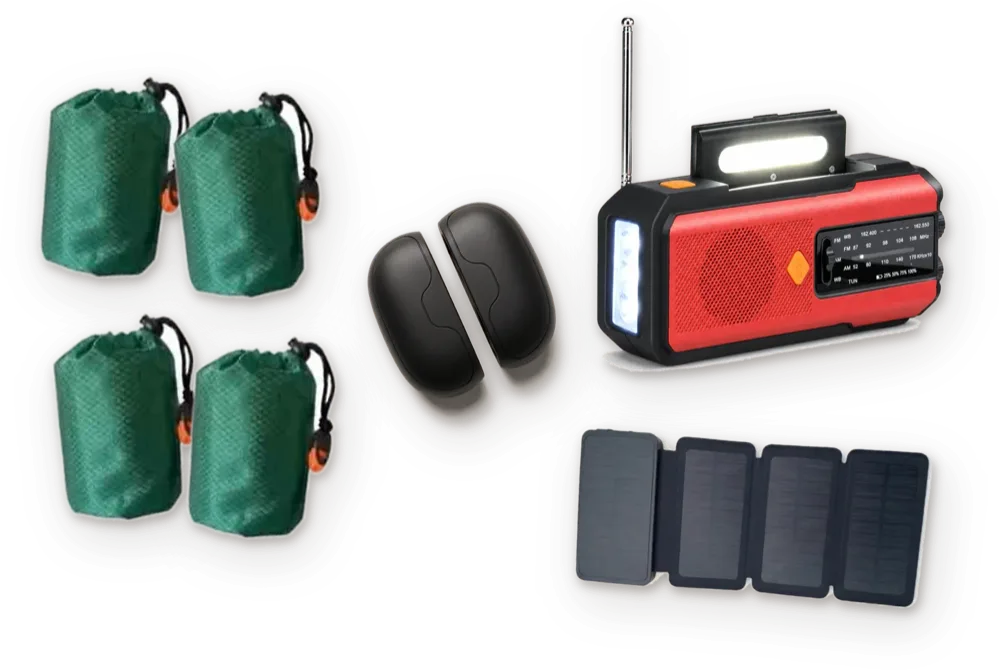
The Blackout & Winter Kit
Heat, power, light and news for when the grid goes down, with the TerraWave hand crank radio inside.
See the kitMore guides for your family
 What to Keep in Your Car for Emergencies: A Printable Checklist by Season
 Stuck in Your Car in Snow: How to Stay Safe and Warm Until Help Comes
 How to Secure a Hotel Room Door When You Travel

We write plain-English safety guides for families, checked against the official sources listed above. Trusted by 60,000+ families.


 ×
 ×
 ×
 ×