How to Put Out a Grease Fire (and What Never to Do)
The 4 moves that stop a pan fire in seconds, the mistake that turns it into a kitchen fire, and how to know when to walk away.

Turn off the burner, then smother the flames: slide a metal lid or a cookie sheet over the pan, or lay a fire blanket over it, and leave it in place until the pan is completely cool. Never use water. If the fire spreads beyond the pan, get everyone out, close the door and call 911 from outside.
Cooking is the leading cause of home fires and home fire injuries in the United States, according to the National Fire Protection Association (NFPA), and unattended cooking is the leading factor behind them.
A grease fire is the most frightening kind, because it can spread fast, and smoking oil is the warning that a fire is close. The good news: a small pan fire is easy to stop if you know the right moves before it happens. Read this once, and you will know them.
In this guide
- Fire needs heat, fuel and air. Turning off the burner and putting a lid on the pan takes two of them away.
- A lid or a fire blanket is the fastest tool. Keep one within reach of the stove, not across the room.
- Never water, never flour, never carry the pan. Each one can spread burning oil.
- If the fire is bigger than the pan, your job is to get out, not to fight it.
What to do in the first 10 seconds
Stay calm and stay at the stove only if the fire is still inside the pan. Do these four things, in this order:
 Step01
Turn off the heat
If you can reach the knob safely, turn off the burner. As long as the oil is being heated, it keeps feeding the flames.
 Step02
Put a lid on the pan
Slide a metal lid or a cookie sheet over the pan from the side, not from above, to cut off the air. Use an oven mitt. A metal lid is safer than glass, which can crack from the heat.
 Step03
No lid? Use a fire blanket
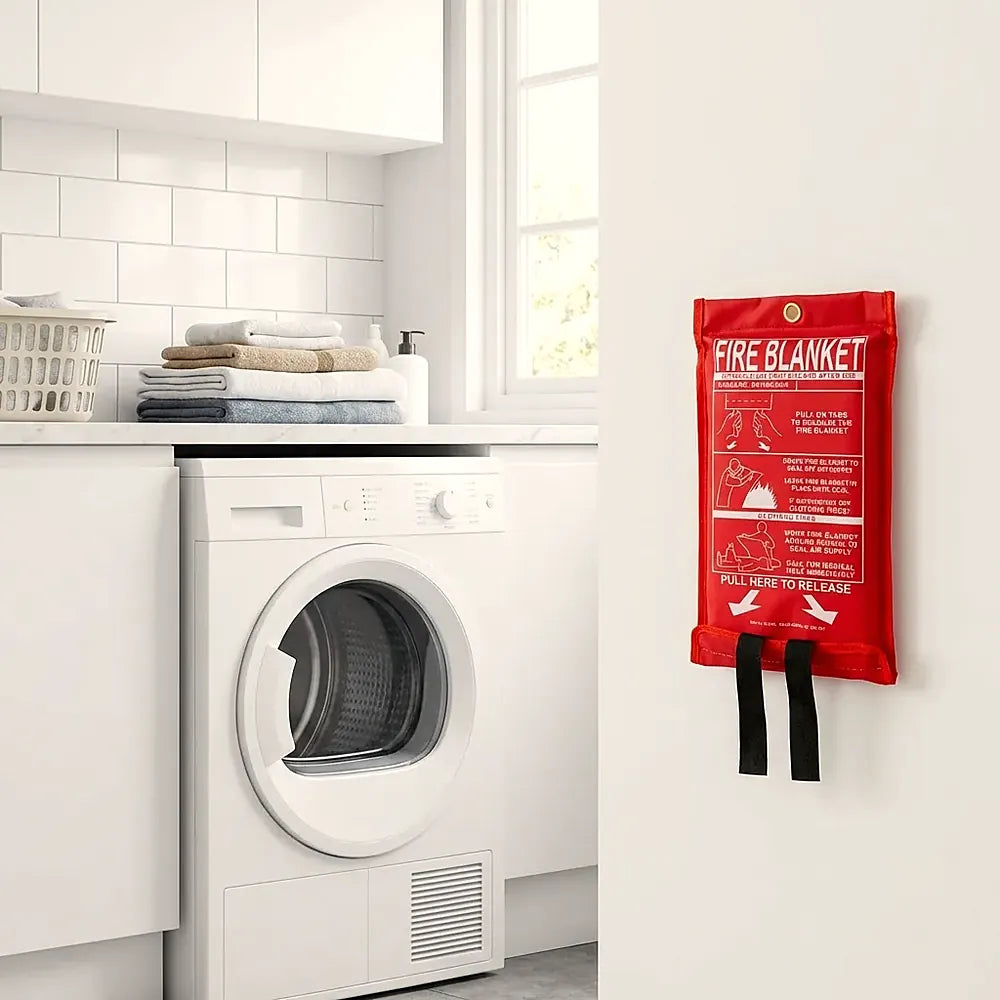
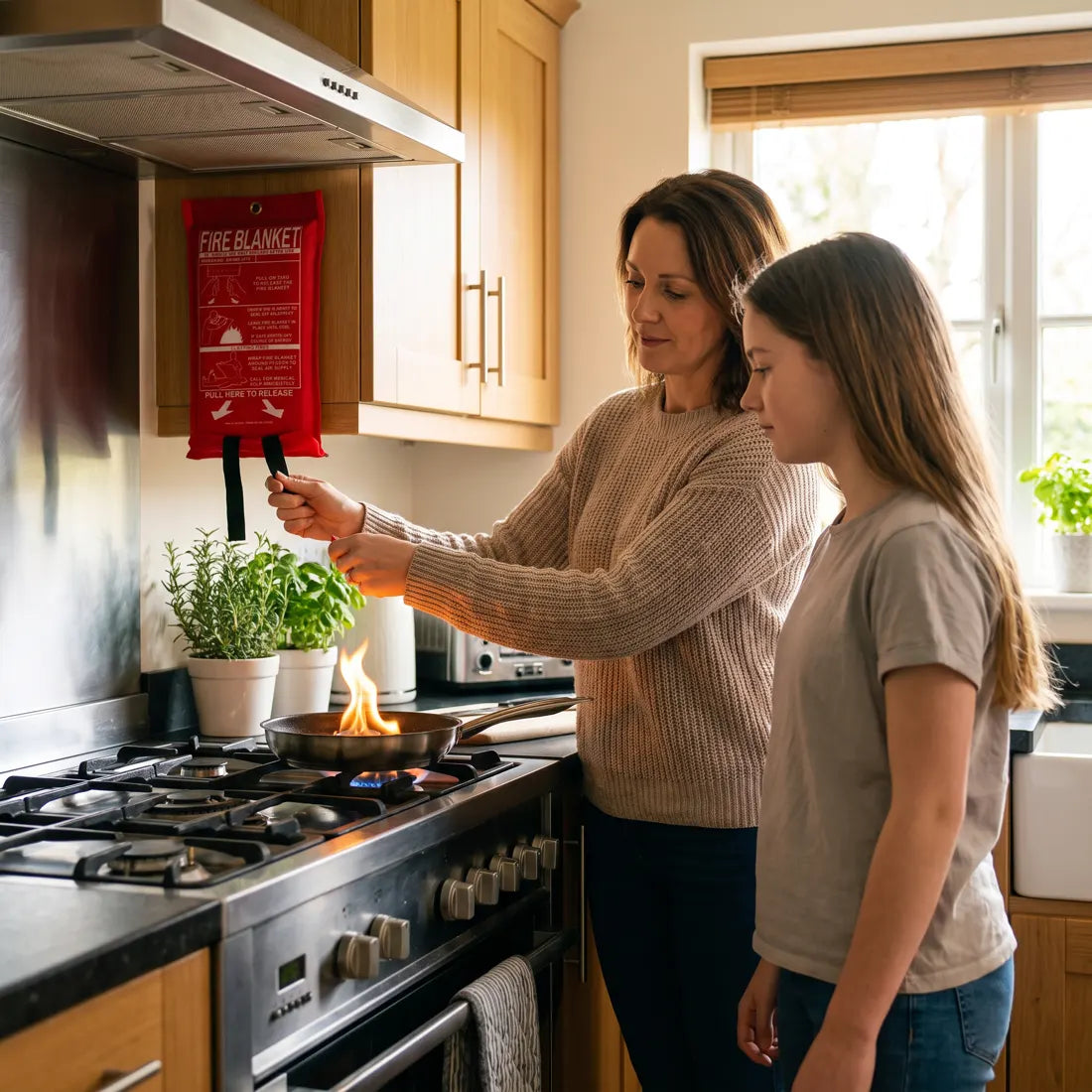
Pull the tabs, hold the blanket up in front of you to shield your hands, and lay it over the pan, away from your body. Leave it in place for at least an hour, until everything has cooled.
 Step04
Leave it in place until it cools
Do not lift the lid or the blanket to check. Hot oil can burst back into flames the moment air gets in. Wait until the pan is completely cool.
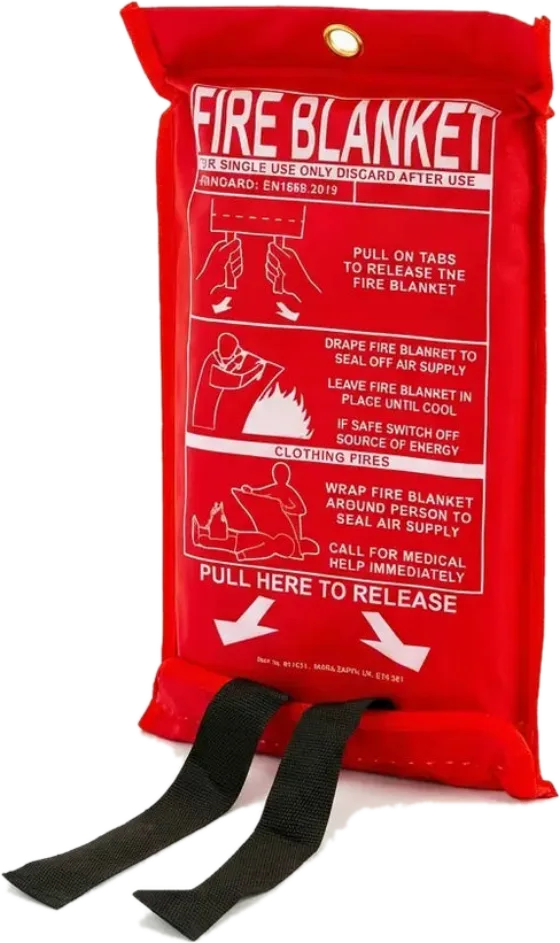
TerraBlanket
A kitchen fire blanket you hang next to the stove. Pull the tabs and it is out of the pouch in one move, no training needed.
$35.95 · 120-day money-back guarantee
See how it worksWhy you must never use water

Water is heavier than oil, so it sinks to the bottom of the pan and turns to steam instantly. The steam explodes upward and throws burning oil out of the pan, onto the stove, the walls and anyone standing close.
Never pour water on a grease fire, and never put a burning pan under the faucet.
Other things that make it worse
- Flour, baking powder or other cooking powders: they make the fire worse. Only baking soda or salt helps, and only on a very small fire.
- Carrying the pan to the sink or outside: you will spill burning oil on yourself and the floor.
- Lifting the lid to check: fresh air restarts the fire.
- Fanning the flames: it feeds the fire air and spreads it.
Lid, fire blanket, baking soda or extinguisher: which one?
Use the first one within reach. This is what each one is good for:
| Tool | Best for | Watch out |
|---|---|---|
| Metal lid or cookie sheet | Any pan fire on the stovetop | Slide it on from the side, use an oven mitt |
| Fire blanket | Pans with no lid, a fire you cannot reach over | Shield your hands, leave it until cool |
| Baking soda or salt | A very small fire just starting | You need a lot of it. Never flour or baking powder |
| Fire extinguisher (Class K or B) | A fire that is small and not spreading | Only with a clear way out behind you |
Keep a lid on the counter next to the stove every time you fry, and hang a fire blanket where you can grab it without reaching over the flames.
When to get out and call 911

A pan fire you can smother is a kitchen problem. A fire beyond the pan is a house fire, and the NFPA advice is simple: just get out.
- The flames are spreading to the cabinets, the wall or the range hood.
- The kitchen is filling with smoke.
- You are not sure you can put it out, or you do not have a clear way out behind you.
Get everyone out, close the door behind you to slow the fire down, and call 911 from outside. Do not go back in.
If the fire is in the oven or microwave
For an oven fire, turn off the heat and keep the door closed. For a microwave fire, turn it off or unplug it and keep the door shut. Do not open the door to look. If the fire does not go out, get out and call 911.
How to prevent the next grease fire

Kitchen fire safety checklist
Smoke alarms give you the minutes you need to get out at night: the U.S. Fire Administration advises alarms inside and outside each bedroom and sleeping area, and on every level of the home. For carbon monoxide alarms, see where to put a CO detector.
Frequently asked questions
What is the fastest way to put out a grease fire?
Turn off the heat and slide a metal lid, a cookie sheet or a fire blanket over the pan, then leave it in place until it cools.
Why can't you put water on a grease fire?
Water sinks under the hot oil, turns into steam and throws burning oil out of the pan, which spreads the fire.
Can baking soda put out a grease fire?
For a very small fire, yes, poured generously. Never use flour, baking powder or other cooking powders.
Does a fire blanket work on a grease fire?
Yes. Laid over the pan, it cuts off the oxygen the way a lid does. Leave it in place until everything has cooled.
When should I leave and call 911?
If the fire spreads beyond the pan, the room fills with smoke, or you are not sure you can put it out. Close the door behind you and call from outside.
- Turn off the burner.
- Smother the pan with a metal lid or a fire blanket, and leave it until cool.
- Never use water, flour, or carry the pan.
- If the fire is bigger than the pan, get out, close the door, call 911.
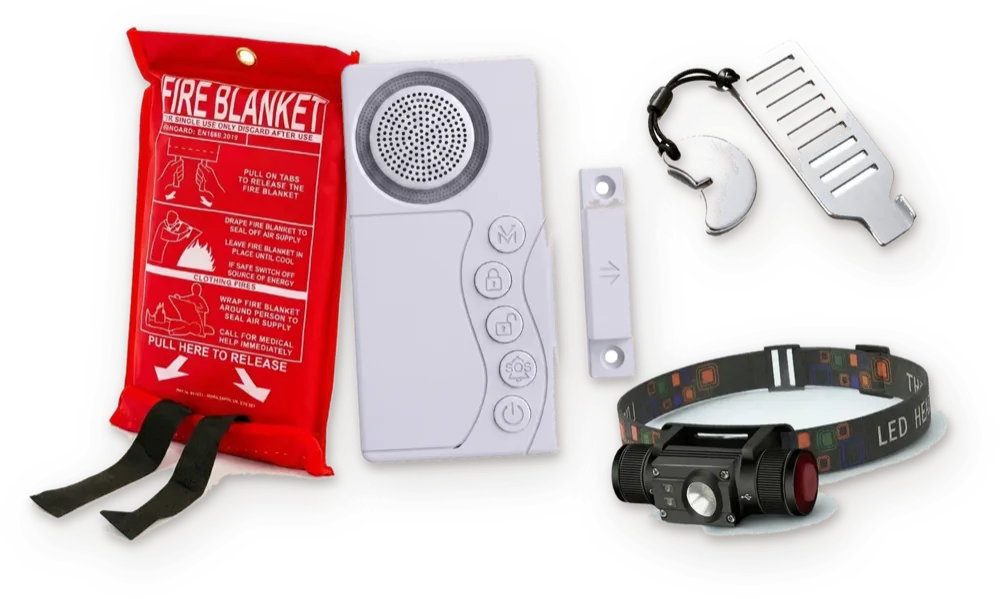
The Safe Night Kit
A kitchen fire blanket, a door lock, a door alarm and a headlamp: the four things that protect a home at night, in one box.
See the kitMore guides for your family
 What Is a NOAA Weather Radio, and Do You Need One?
 What to Keep in Your Car for Emergencies: A Printable Checklist by Season
 Stuck in Your Car in Snow: How to Stay Safe and Warm Until Help Comes

We write plain-English safety guides for families, checked against the official sources listed above. Trusted by 60,000+ families.


 ×
 ×
 ×
 ×