Where to Put a Carbon Monoxide Detector in Your Home
The two places every home needs a CO alarm, how many your house needs, the spots that cause false alarms, and a 3-step install anyone can do.

Put a carbon monoxide alarm in a central spot outside each separate sleeping area, and one on every level of the home, including the basement. That is the NFPA and CPSC advice. Mount it at the height the manufacturer gives for that model. If you use a combined smoke and CO alarm, also put one inside each bedroom, because that is where smoke alarms belong.
A carbon monoxide alarm only protects you if it can wake you up. Carbon monoxide has no color, smell or taste, and the CDC warns that people who are asleep can be poisoned before they feel any symptom. The alarm is the only warning a sleeping family gets.
The official placement rules are short. Here they are room by room, with a simple install and upkeep routine.
In this guide
- Outside every sleeping area and on every level: those are the two places the NFPA and CPSC name.
- Height: follow the manual for your model. A combined smoke and CO alarm goes on the ceiling or high on the wall.
- Avoid garages, steamy bathrooms and spots right on top of a furnace or stove.
- Test monthly, and interconnect the alarms if you can, so when one sounds, they all sound.
Where do carbon monoxide detectors go?

The NFPA and the CPSC give the same core rule. Install CO alarms:
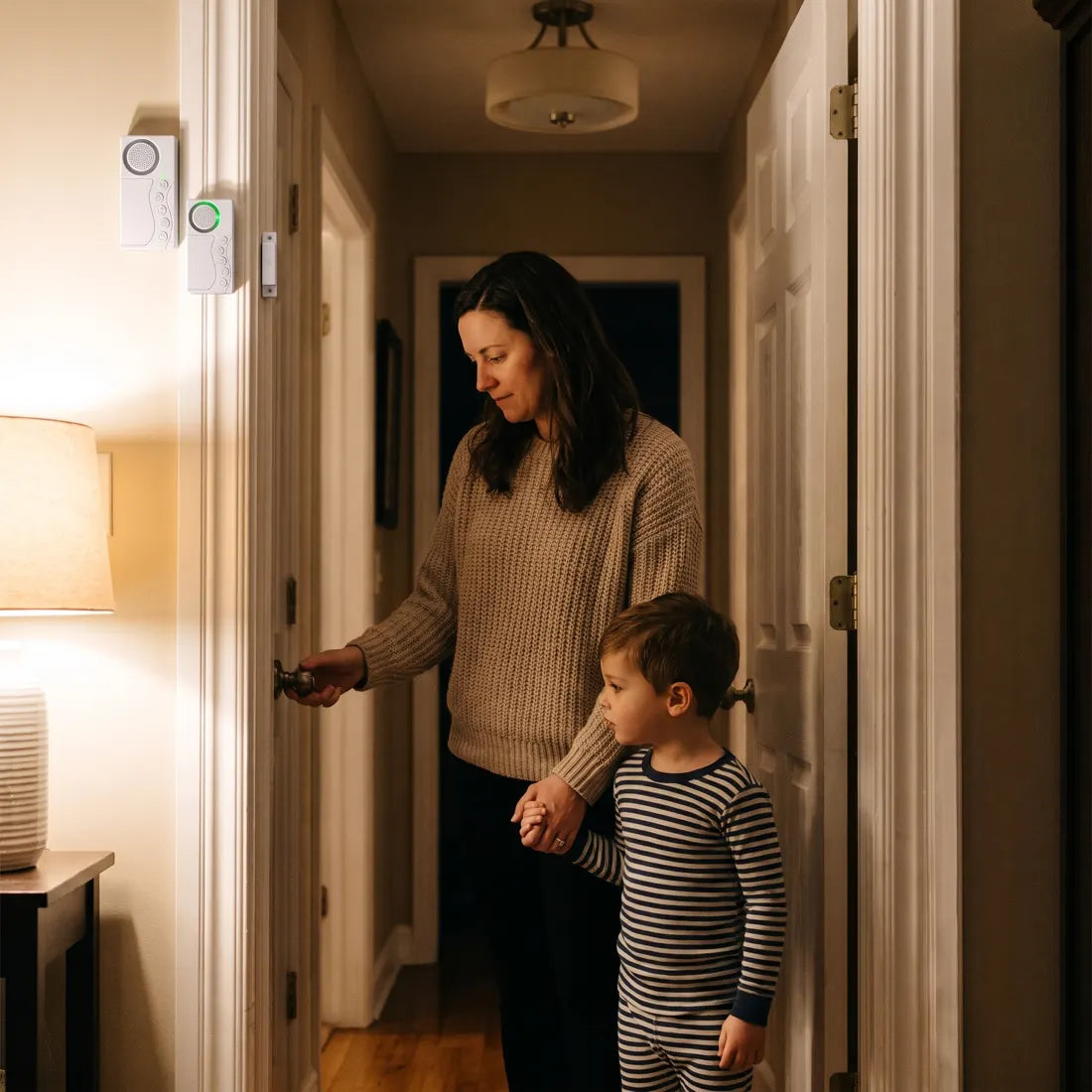
- In a central location outside each separate sleeping area. In most homes, that is the hallway right outside the bedroom doors.
- On every level of the home, including the basement.
- In any other place your state or local code requires. Your state or city may add its own rules, so check with your local fire department if you are not sure.
If your family only has one alarm today, put it near the sleeping areas, where it is loud enough to wake you. Then add one per floor.
Combined smoke and CO alarms
Smoke alarms follow a stricter rule. The U.S. Fire Administration says to put them inside and outside each bedroom and sleeping area, and on every level. So if you use combined alarms, place them by the smoke rule, and the CO rule is met too.
How many CO detectors do I need?
Count one for each group of bedrooms, then one for every other level. Here is how that works in common homes:
| Your home | CO alarms (minimum) | If you use combined smoke and CO alarms |
|---|---|---|
| One floor, all bedrooms on one hallway | 1 in the hallway | 1 in the hallway, plus 1 in each bedroom |
| One floor, bedrooms at opposite ends | 1 outside each group of bedrooms | 1 outside each group, plus 1 in each bedroom |
| Two floors, bedrooms upstairs, plus a basement | 3: upstairs hallway, main floor, basement | 3, plus 1 in each bedroom |
Walk the house once with a pencil and paper. Mark every bedroom door and every floor. Each mark that does not have an alarm within sight is a spot that needs one.
How high should a carbon monoxide detector be?
There is no single height in the official advice. The NFPA says to follow the manufacturer's instructions for placement and mounting height, because each model is designed and tested for its own spot. Some go on the ceiling, some high on the wall, some lower. The manual will tell you.
Combined smoke and CO alarms usually go up high, because the U.S. Fire Administration advises putting smoke alarms on the ceiling or high on the wall.
Where not to put a CO detector

An alarm in the wrong spot either goes off for no reason or misses the air you breathe at night. Check your manual, and in general keep alarms out of:
- The garage. Put one inside the house, near the door to the garage, instead.
- Right on top of a furnace, water heater or stove. Mount it a few steps away, at the distance the manual gives.
- Steamy bathrooms. The U.S. Fire Administration advises moving an alarm that sounds from shower steam or cooking several feet away from the bathroom or kitchen.
- Next to windows, fans and air vents, where drafts push fresh air past the alarm.
- Behind curtains or furniture, where air cannot reach it.
Never take out the batteries to stop false alarms. Move the alarm to a better spot instead. An alarm without batteries protects no one.
How to install a CO alarm in 3 steps
A battery-powered alarm takes about ten minutes and a step stool. No electrician needed.
 Step01
Put in fresh batteries
Use new batteries of the type the manual lists. Write the install date on the back of the alarm with a marker, so you know when it is due to be replaced.
 Step02
Mount it in the right spot
Screw the base to the ceiling or wall at the height the manual gives, in the hallway outside the bedrooms, then twist the alarm onto the base. Have someone hold the stool.
 Step03
Press the test button
Hold the test button until it sounds. Do it with the family in the house, so everyone knows the sound and knows it means: go outside.
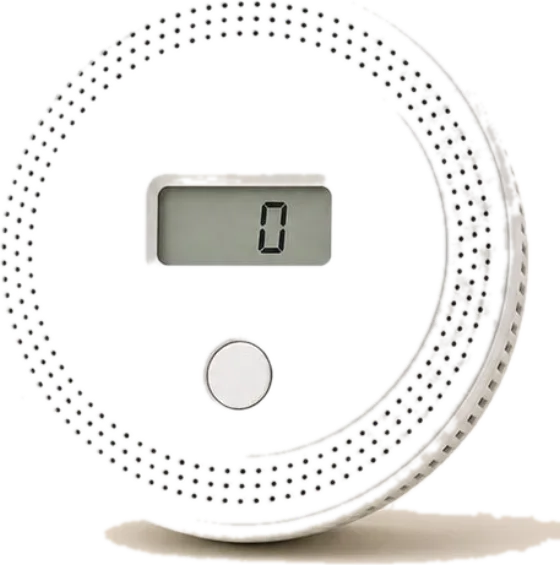
TerraSentinel, 2-pack
Smoke and carbon monoxide in one round unit, with a CO number on the screen. It mounts on the ceiling or high on the wall, runs on 3 AA batteries and needs no wiring, outlet or app.
$139.90 · 120-day money-back guarantee
See how it worksBasement, garage and kitchen: the tricky spots

Basement
The basement counts as a level, so it needs its own alarm. It is also where the furnace and water heater often are. Put the alarm on the basement ceiling a few steps away from them, at the distance the manual gives, not right above them.
Attached garage
Do not mount the alarm in the garage. Put one inside the house near the garage door, especially if there is a bedroom above or next to the garage. And never warm up a car in an attached garage, even with the door open: the CDC and NFPA both warn against it.
Kitchen
An alarm right next to a gas stove can sound every time you cook. Place it down the hall, at the manual's distance.
How to test and look after your CO alarms
CO alarm upkeep checklist
When the alarm sounds
Get everyone outside into fresh air, or at least to an open window or door, and make sure every person is accounted for. Call 911 from outside and stay there until emergency personnel say it is safe to go back in. Learn the warning signs in carbon monoxide poisoning symptoms.
Frequently asked questions
Where is the best place to put a carbon monoxide detector?
In a central spot outside each sleeping area, usually the hallway outside the bedrooms, plus one on every level of the home, including the basement.
How high should a carbon monoxide detector be?
At the height the manufacturer gives for that model. Combined smoke and CO alarms go on the ceiling or high on the wall.
How many carbon monoxide detectors do I need?
At least one outside each separate sleeping area and one on every level. A two-story home with a basement needs at least three.
Should I put a CO detector in the kitchen or garage?
Not in the garage, and not right next to the stove, where it can give false alarms. Put one inside the house near the garage door, and one down the hall from the kitchen.
How often should I test a CO detector?
Once a month with the test button. Replace it when the manufacturer says, or every 5 years.
- One CO alarm outside each sleeping area, and one on every level, basement included.
- Mount it at the height the manual gives for your model.
- Keep it out of the garage, steamy bathrooms and spots right above fuel appliances.
- Test monthly, interconnect if you can, and replace it on time.
TerraSentinel smoke and CO alarm
A smoke alarm and a CO alarm in one, with a readable CO number on the screen. Battery-powered, so you can mount one outside every bedroom in minutes, no wiring needed.
See how it worksMore guides for your family
 What Is a NOAA Weather Radio, and Do You Need One?
 What to Keep in Your Car for Emergencies: A Printable Checklist by Season
 Stuck in Your Car in Snow: How to Stay Safe and Warm Until Help Comes

We write plain-English safety guides for families, checked against the official sources listed above. Trusted by 60,000+ families.




 ×
 ×
 ×
 ×