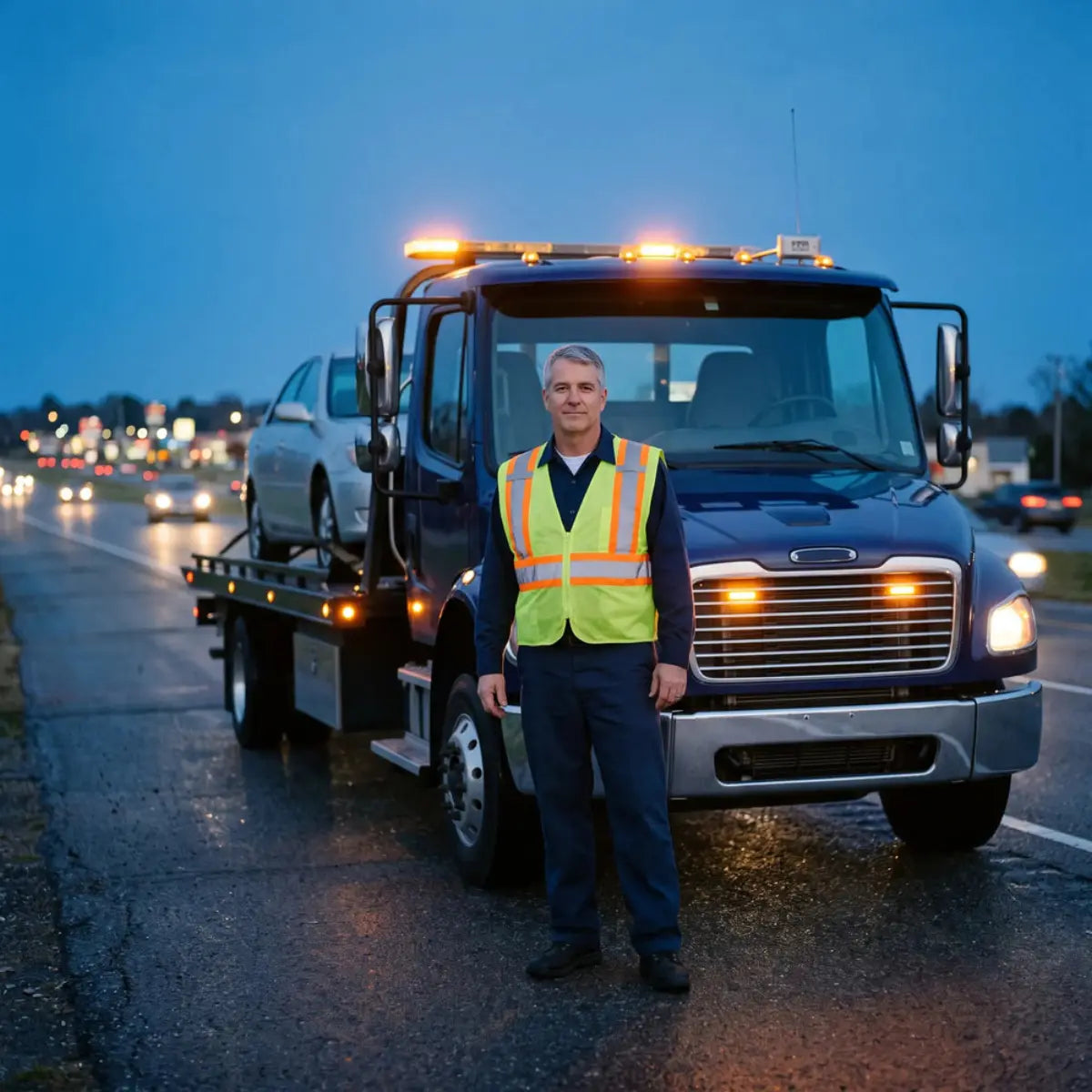
How to Stay Warm Without Power: A Room-by-Room Plan
One warm room, the right layers, a safe way to sleep, and the heat sources that can kill you without a sound.

Move everyone into one small room, close it off and seal the drafts. Close the doors to unused rooms, stuff towels under the door and hang blankets over the windows at night. Dress in loose layers with hats and socks, eat regular meals and drink warm, sweet drinks (no alcohol). Never use a gas stove, oven, grill or generator indoors for heat: they make carbon monoxide. If you cannot keep the home warm, go somewhere that has heat.
When the power goes out in winter, the heat often goes with it, and the house cools a little more every hour.
The goal is not to heat the whole house. It is to keep every person warm, safely, until the power comes back. Here is the plan, room by room, based on CDC, ready.gov and National Weather Service advice.
In this guide
- Heat one small room, not the whole house. Close off the rest.
- Layers, hats and dry socks keep more warmth than one heavy coat.
- Nothing that burns fuel goes inside: no gas oven, grill, camp stove or generator. Generators stay outside, at least 20 feet from windows and doors.
- Babies and adults over 65 lose heat fastest. Check on them first.
Which room should you keep warm?

Pick one room for everyone, people and pets. The best choice is:
- Small, so there is less air to keep warm.
- Few windows, and on the side of the house away from the wind.
- Close to a bathroom, so nobody has to walk through a cold house at night.
Everyone's body heat adds up in a small room. Close every other door in the house and leave those rooms cold.
The 5-step plan to stay warm tonight
 Step01
Close off the rooms you do not need
The CDC and the National Weather Service both advise closing off unneeded rooms. Open outside doors as little as you can.
 Step02
Seal the drafts
Stuff towels or rags in the gap under the door. Close the curtains, and at night hang blankets over the windows.
 Step03
Dress in loose layers
Several loose layers hold more warmth than one thick one. Wool, fleece and down beat cotton. Add a hat, socks and gloves, and change out of anything damp right away.
 Step04
Sleep together, off the floor
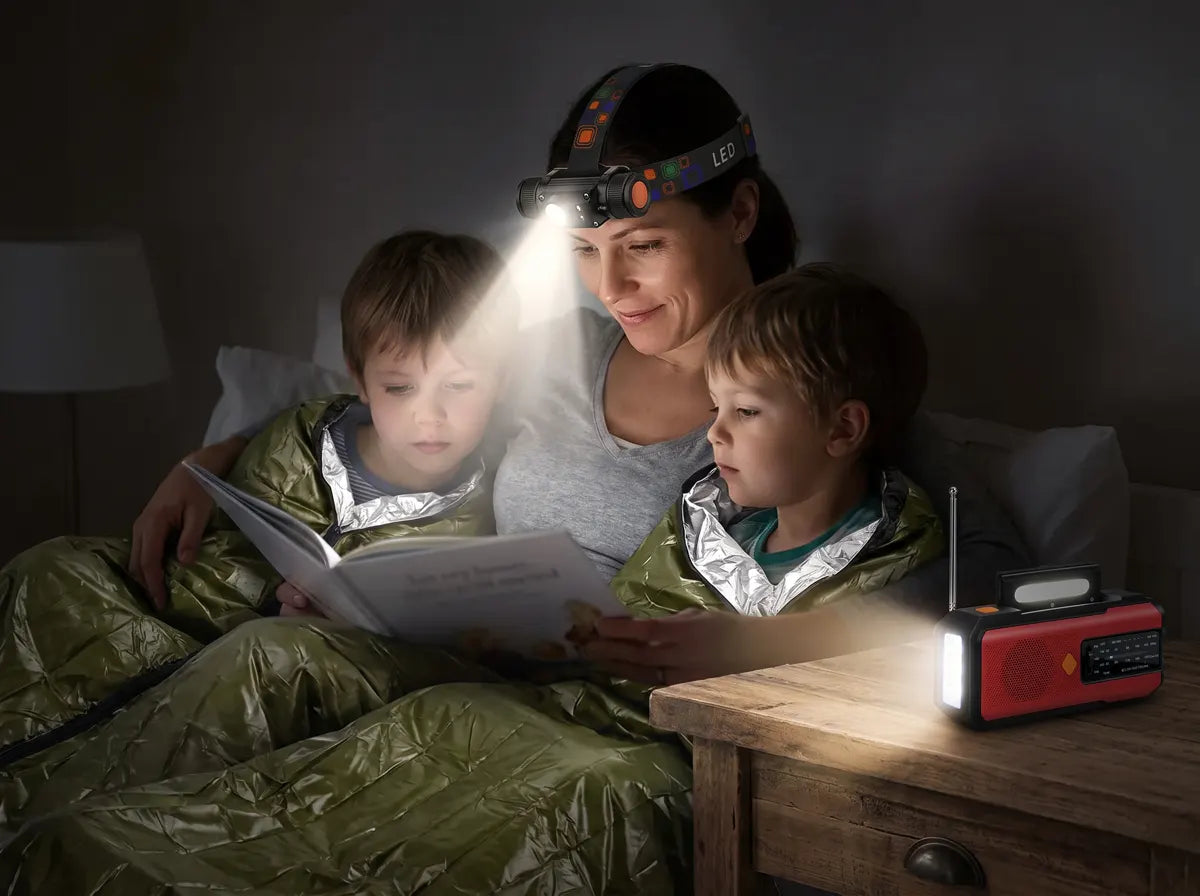
Sleep in the warm room with sleeping bags and blankets. Put rugs or folded blankets under you: the cold floor pulls heat out of your body all night.
 Step05
Eat and drink to make heat
Regular, balanced meals help your body stay warm. Drink warm, sweet drinks or broth. Skip alcohol and caffeine, which make your body lose heat faster.
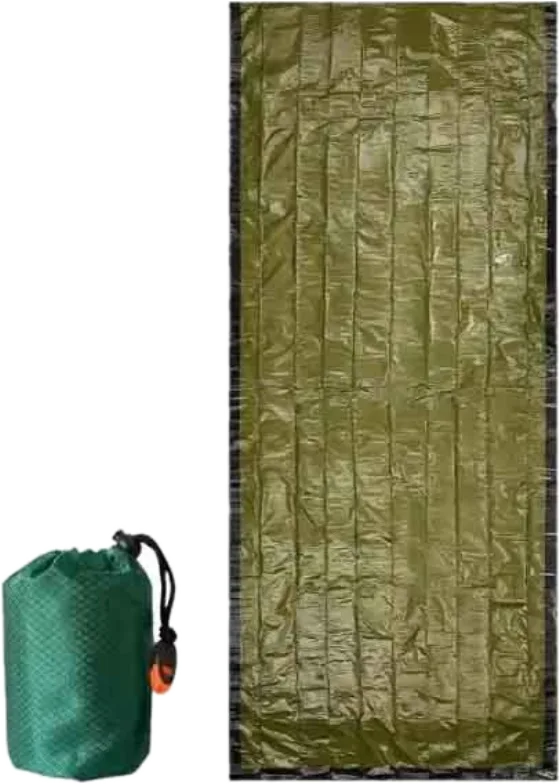
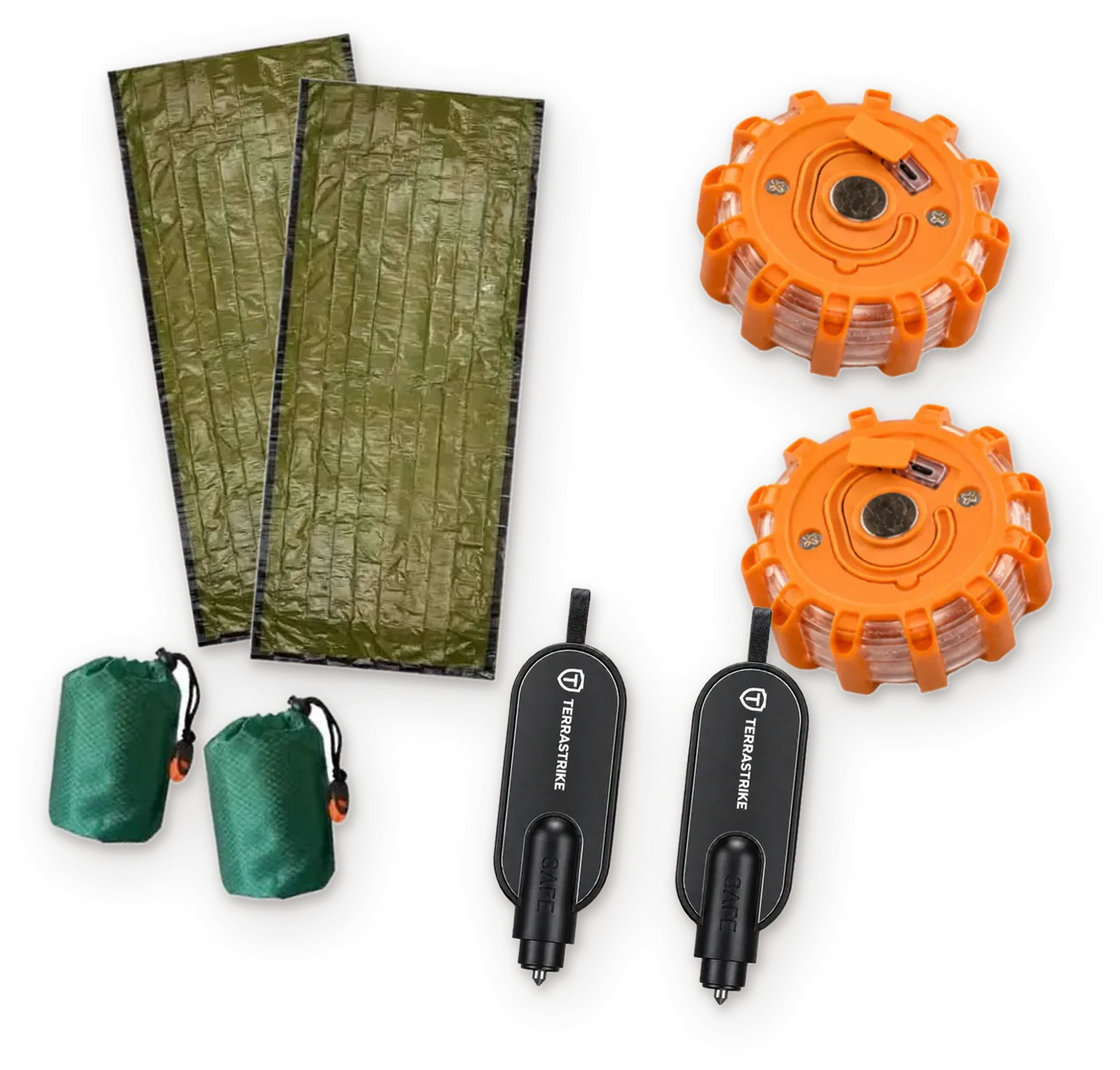
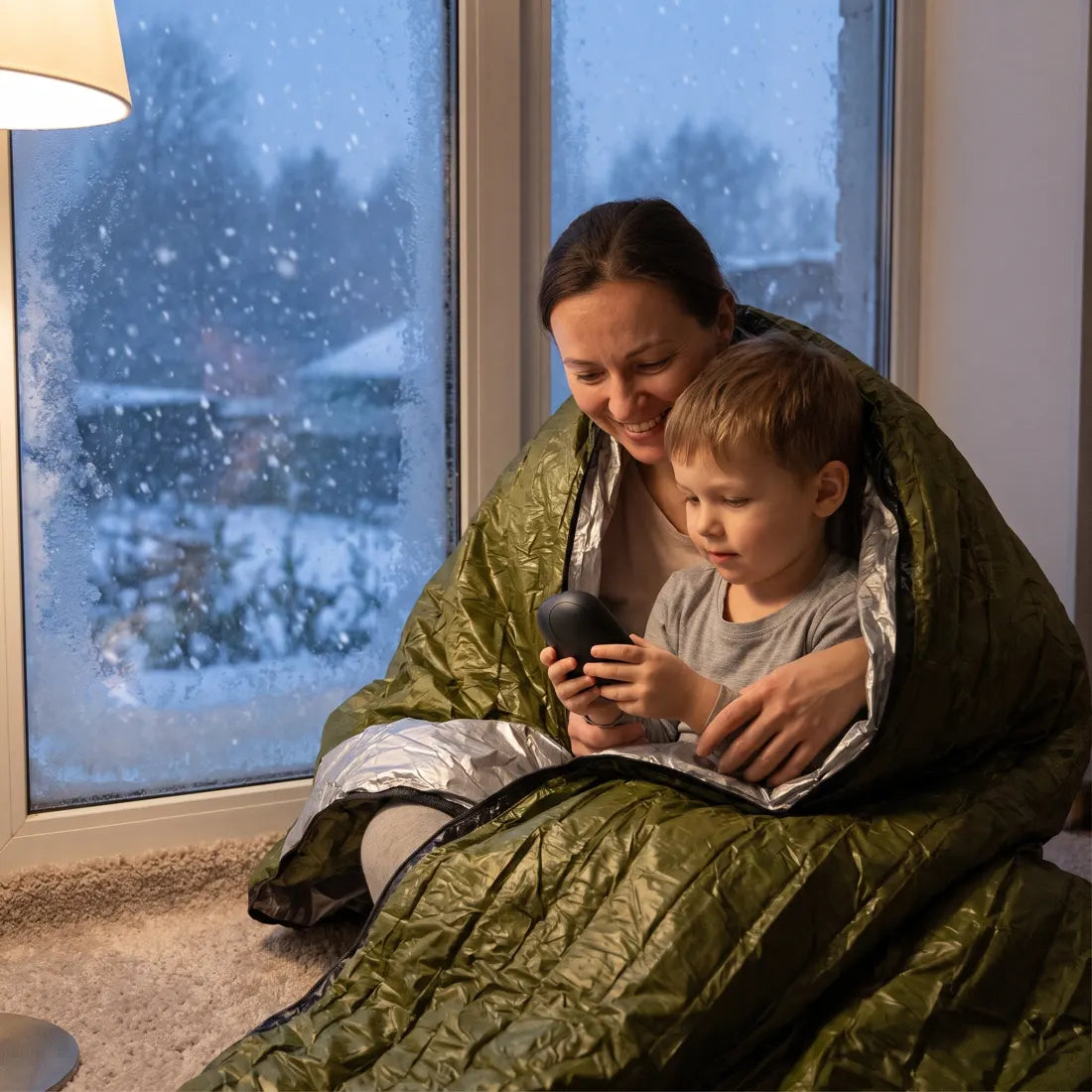
TerraShell Emergency Sleeping Bag
For step 4: an emergency sleeping bag with a reflective lining that sends your body warmth back toward you. About 4 oz, works with no power, gas or batteries.
$39.00 · 120-day money-back guarantee
See how it worksWhat should you never use to heat your home?

Fuel-burning devices make carbon monoxide (CO), a gas you cannot see or smell, and a closed-up warm room traps it.
Never use a gas stove or oven, a charcoal or gas grill, a camp stove or a generator inside your home or garage to stay warm, not even for a few minutes with a window open.
- Generators: outdoors only, at least 20 feet from windows, doors and vents, and away from an attached garage.
- Fireplaces and wood stoves: only if they are properly vented to the outside. Do not burn paper in a fireplace.
- Kerosene heaters: only with proper ventilation.
- CO alarms: install battery-operated or battery backup CO detectors near every sleeping area and on every level of the home. See where to put a CO detector.
The most common symptoms, according to the CDC, are headache, dizziness, weakness, upset stomach, vomiting, chest pain and confusion, often mistaken for the flu. If you suspect CO, get everyone outside into fresh air and call 911. Learn the signs of carbon monoxide poisoning now, before you need them.
Safe ways to add warmth
Not every heat source is dangerous. This is what is safe, and how:
| Heat source | Safe? | How to use it |
|---|---|---|
| Blankets, sleeping bags, layers | Yes | The base of the plan. Put a layer under you, too |
| Rechargeable hand warmer | Yes | In a pocket or in bed. No flame, no fumes |
| Electric space heater (on power or a generator outside) | Yes, with care | Auto shut-off, at least 3 feet from bedding and curtains, no extension cord, never left alone with kids |
| Vented fireplace or wood stove | Yes, if vented | Only if it vents to the outside and is up to code |
| Gas oven or stovetop | No | Carbon monoxide and fire risk |
| Grill, camp stove, generator indoors | No | Carbon monoxide, even in a garage |
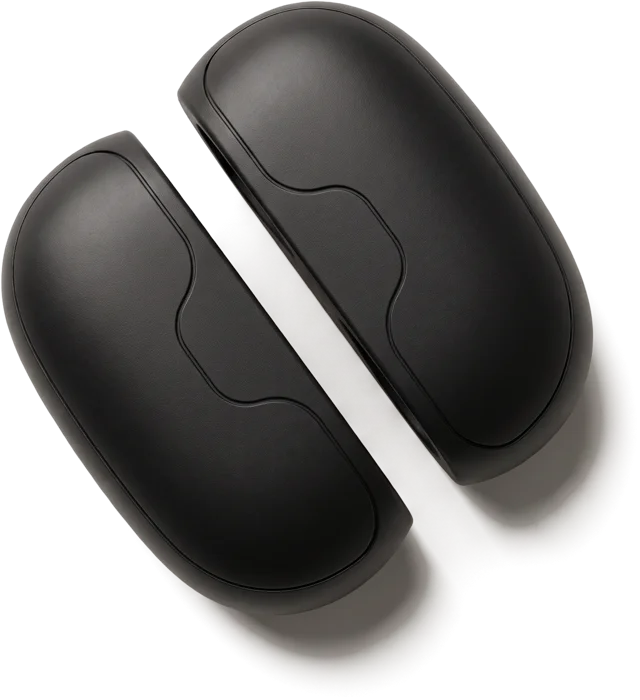
Mag-Split Pocket Furnace
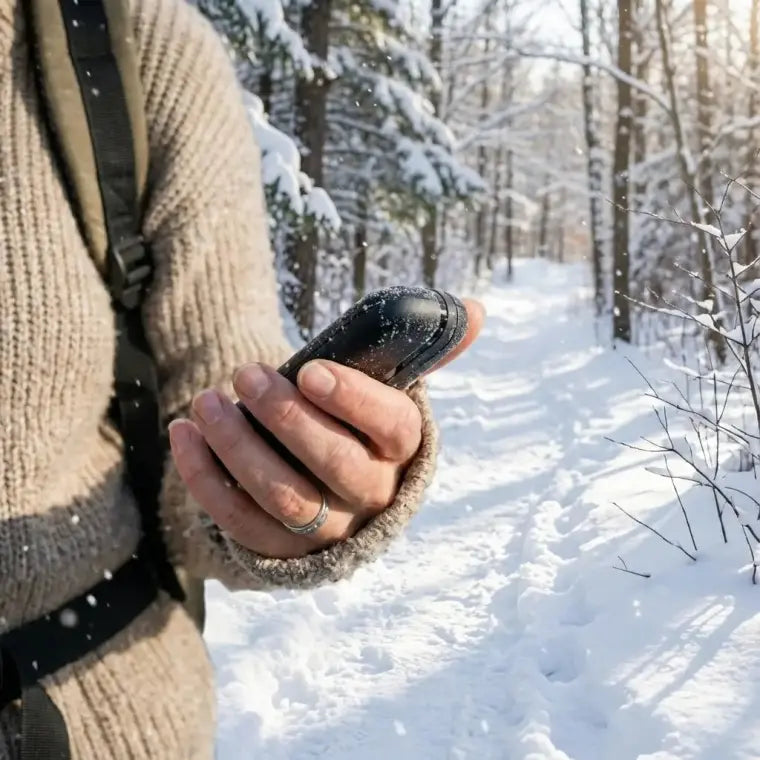
A rechargeable pocket warmer that heats up in about 3 seconds and splits in two to share. It also tops up a phone in a blackout.
$69.00 · 120-day money-back guarantee
See how it worksFill a thermos with something hot as soon as the power goes out, while you can still heat water. Warm drinks later in the evening are worth a lot.
How do you know if someone is getting too cold?

Hypothermia means the body is losing heat faster than it can make it. The CDC lists these warning signs:
- Adults: shivering, exhaustion, confusion, fumbling hands, memory loss, slurred speech, drowsiness.
- Babies: bright red, cold skin and very low energy.
Hypothermia is a medical emergency. A body temperature below 95°F needs medical care right away. While you wait:
- Move the person to the warmest room and take off any wet clothes.
- Warm the center of the body first: chest, neck, head and groin, under dry blankets, or skin to skin.
- Give warm drinks if they are awake, never alcohol.
- Once they warm up, keep them dry and wrapped, head and neck included.
The people most at risk are older adults and babies sleeping in cold rooms. The CDC says infants under one year old should never sleep in a cold room, and that people over 65 should check the temperature in their home often during extreme cold.
When to leave and go somewhere warm
If you cannot keep the warm room warm, do not tough it out. The CDC advises making temporary arrangements to stay elsewhere, and ready.gov points to community locations with heat during extreme cold. Check with your local officials for open warming centers.
Warm room checklist
For the rest of the outage plan (light, phones, food and news), see what to do when the power goes out.
Frequently asked questions
How do you stay warm when the power goes out in winter?
Gather everyone in one small room, close off the rest of the house, seal the drafts, dress in loose layers with hats and socks, and sleep together in sleeping bags with a layer under you.
Is it safe to use a gas oven for heat?
No. A gas oven or stovetop used for heat can fill the home with carbon monoxide and can start a fire.
Can I run a generator in the garage?
No, not even with the door open. Generators belong outdoors, at least 20 feet from windows, doors and vents.
What are the signs of hypothermia?
Shivering, exhaustion, confusion, fumbling hands, memory loss, slurred speech and drowsiness in adults; bright red, cold skin and very low energy in babies.
Who is most at risk in a cold house?
Older adults and babies. Infants should never sleep in a cold room, and people over 65 should check the home's temperature often.
Does drinking alcohol help you stay warm?
No. Alcohol and caffeine make your body lose heat faster. Warm, sweet drinks or broth are better.
- Heat one small room and close off the rest.
- Seal drafts, dress in loose layers, sleep off the floor.
- Never use a gas oven, grill, camp stove or generator indoors.
- Watch older adults and babies, and leave for a warm place if you cannot keep warm.
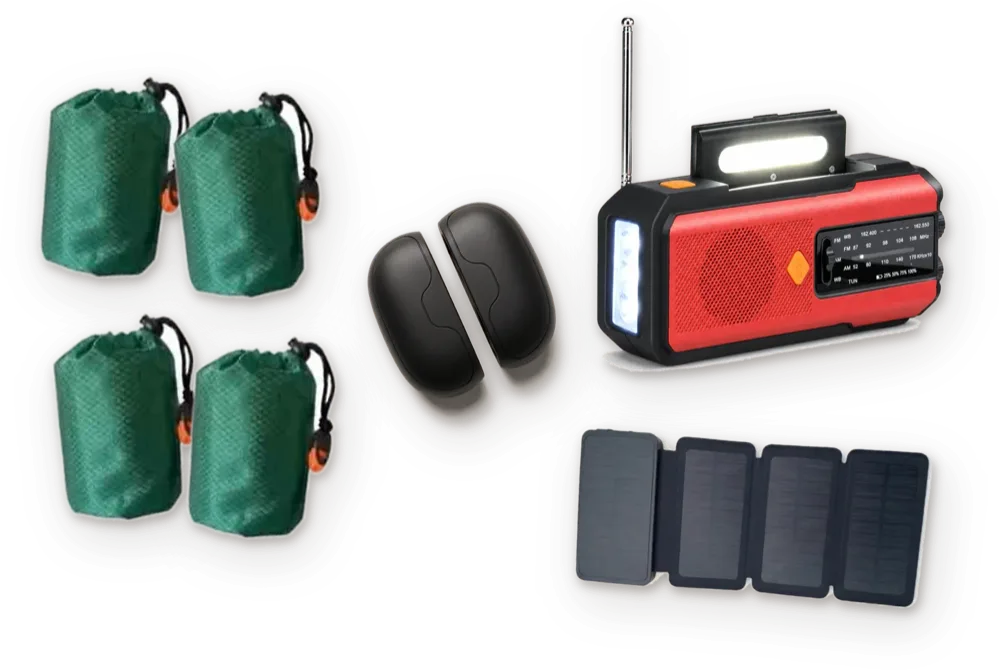
The Blackout & Winter Kit
Four emergency sleeping bags, a rechargeable pocket warmer, a solar power bank and a hand crank radio: heat, power, light and news in one box.
See the kitMore guides for your family
 What Is a NOAA Weather Radio, and Do You Need One?
 What to Keep in Your Car for Emergencies: A Printable Checklist by Season
 Stuck in Your Car in Snow: How to Stay Safe and Warm Until Help Comes

We write plain-English safety guides for families, checked against the official sources listed above. Trusted by 60,000+ families.

 ×
 ×
 ×
 ×