What to Do When the Power Goes Out: A Family Checklist
What to do in the first hour, how to get through the first night, when to leave on day two, and the printable list to get ready before it happens.

First hour: check if it is just your home, switch to flashlights (not candles), unplug electronics and keep the fridge and freezer closed. First night: keep one phone charged, follow local news on a battery or crank radio, and keep everyone in one room. Always: generators, grills and camp stoves stay outdoors, at least 20 feet from windows, and never use a gas stove to heat your home. If it gets too hot or too cold, or someone depends on powered medical devices, go to a place with power.
Most power outages last a few hours. Some, after a big storm, last days. The families who handle it well are the ones who know what to do in the first hour, before the phones die and the fridge warms up.
This plan follows ready.gov and American Red Cross guidance, split into the moments you will actually live through: the first hour, the first night and day two.
In this guide
- Flashlights, not candles. Ready.gov advises a flashlight for every person in the house.
- Fridge closed: about 4 hours of safe food in the fridge, about 48 in a full freezer.
- Fuel-burning devices stay outside, at least 20 feet from windows. Never a gas stove for heat.
- Stay at least 35 feet from fallen power lines and call 911.
What to do in the first hour
Do these four things right away, in this order:
 Step01
Check if it is just your home
Look out the window: are the neighbors dark too? If only your home is out, check your breaker panel. If a breaker has tripped and you do not know why, the Red Cross advises having an electrician inspect it before you turn it back on. Then check your utility's outage line or map.
 Step02
Switch to flashlights, not candles
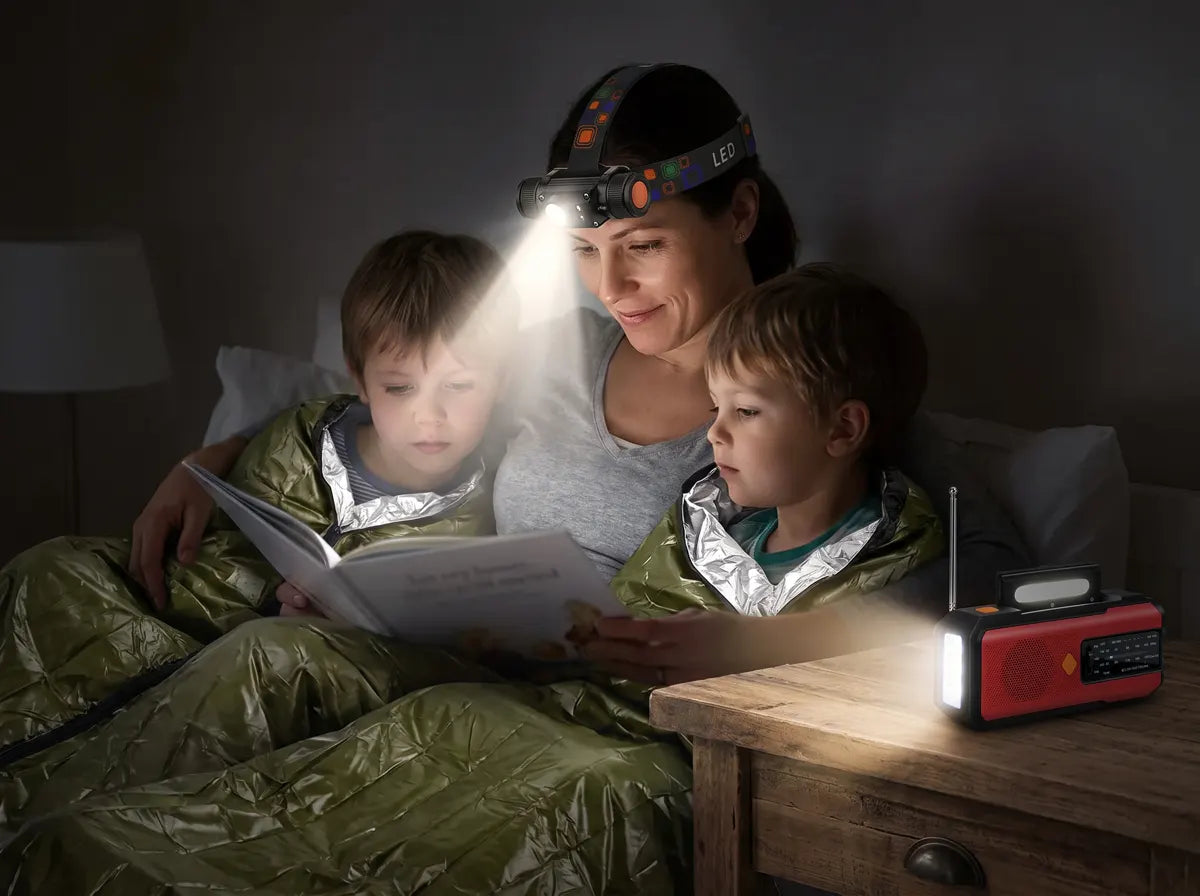
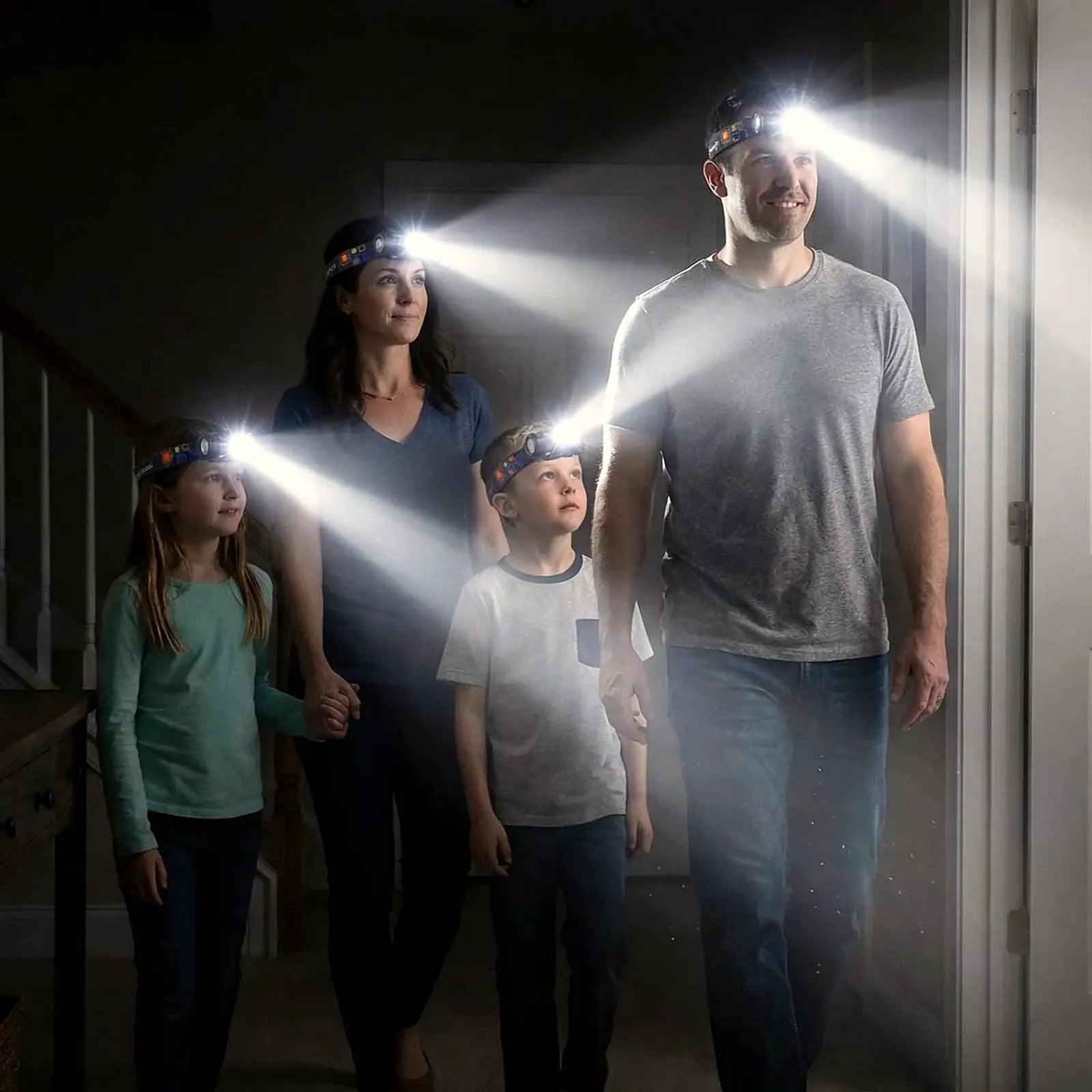
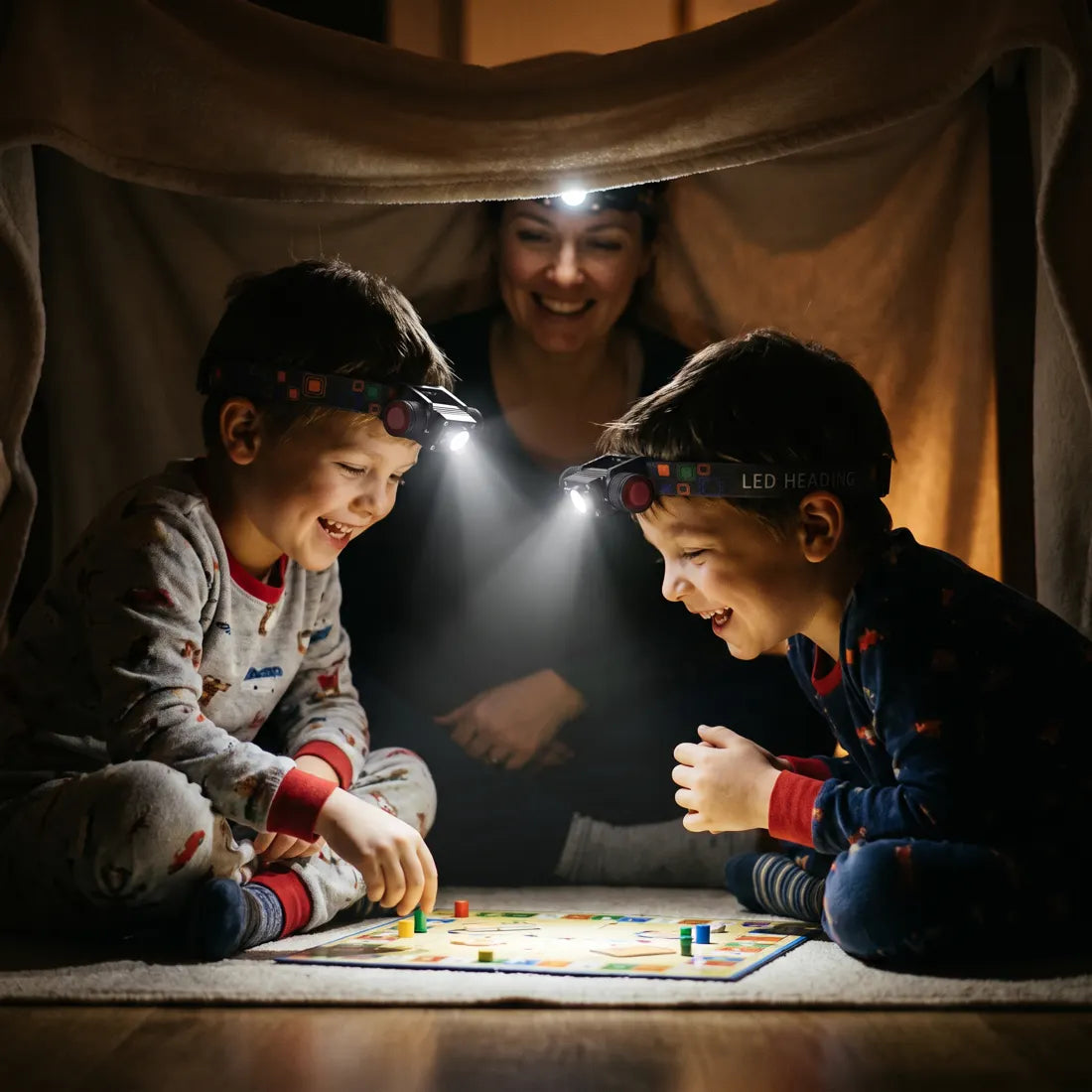
Candles are a fire risk in a dark house full of blankets. Use flashlights or headlamps, one for each person, so nobody walks around in the dark.
 Step03
Unplug electronics
Unplug the TV, computer and other appliances, so a power surge does not damage them when the power returns. Leave one lamp switched on so you know when it is back.
 Step04
Keep the fridge and freezer closed
A closed fridge keeps food cold for about 4 hours, a full freezer about 48. Tell the kids. See how long food lasts in the fridge without power.
How do you keep your phone charged and get news?

When the power is out, cell service and internet can go down too. Plan for both:
- Save the battery: lower the screen brightness, close apps and turn on low power mode. Keep one phone for calls only.
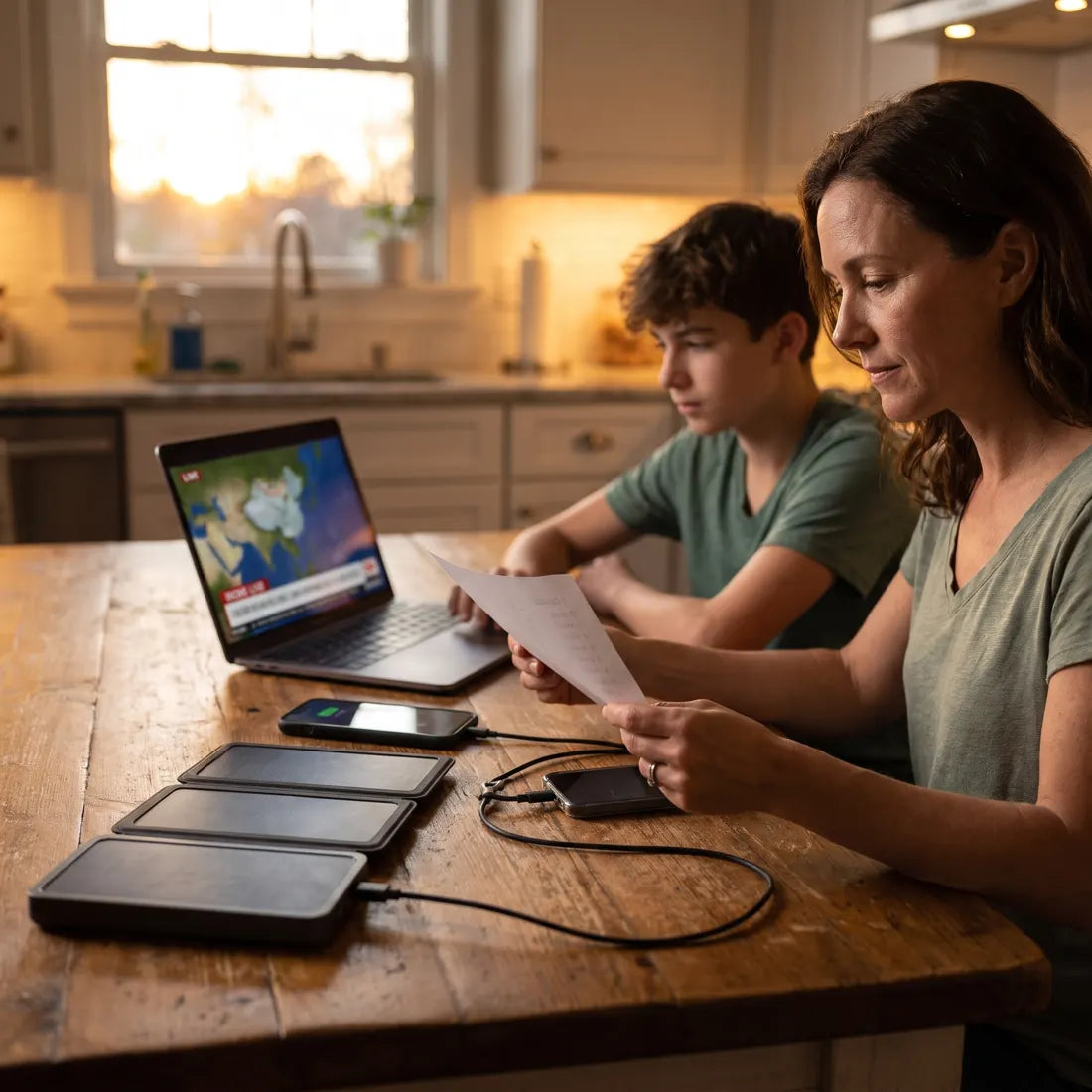
- Charge without the wall: a charged power bank, a solar charger or a car charger with the engine running outside, never in a closed garage.
- Get the news without internet: the Red Cross advises a crank or battery radio. Local stations tell you how long the outage may last and where warming or cooling centers are open.
- Check in: text your family and neighbors to say you are OK, and ask if they need help.
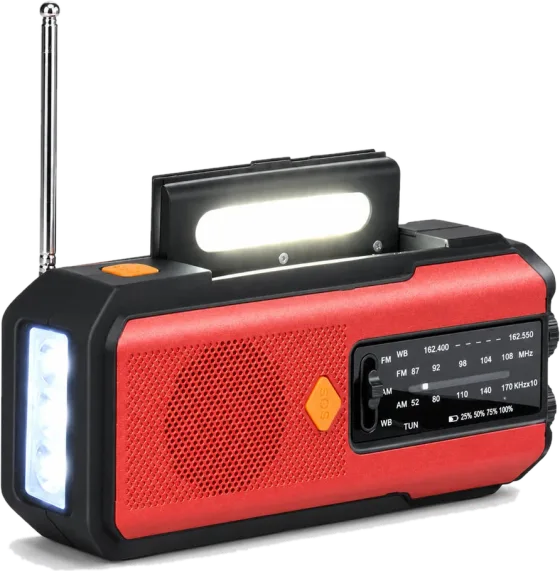
TerraWave
AM, FM and NOAA weather radio you charge by hand crank, sun or USB-C, with a flashlight and a USB port that charges your phone.
$129.95 · 120-day money-back guarantee
See how it works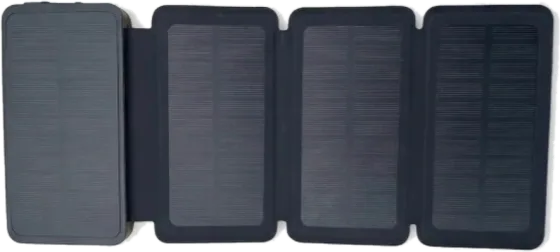
TerraCell
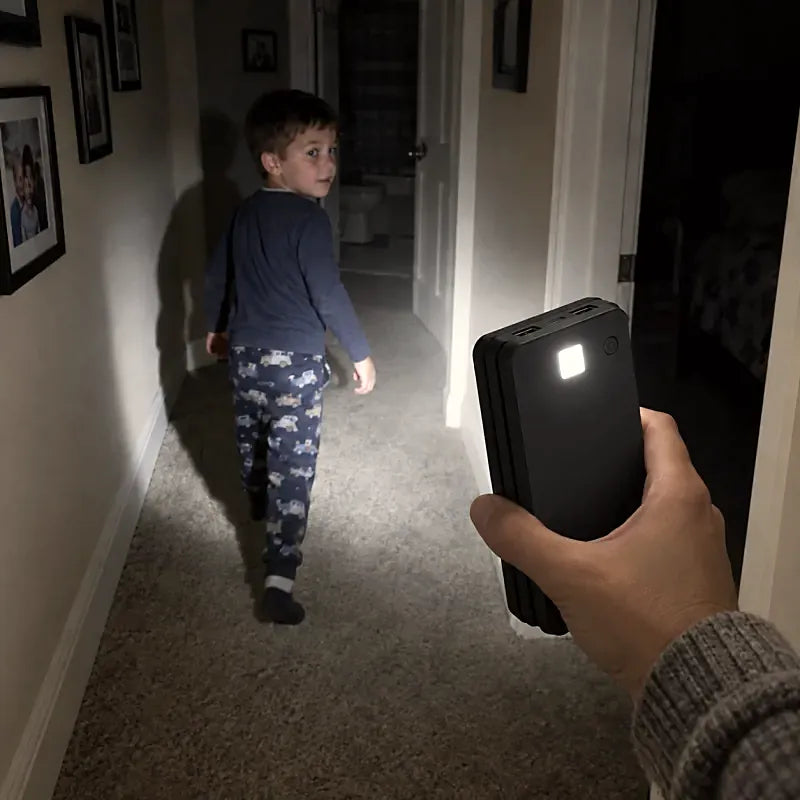
A solar power bank that gives up to 5 full phone charges and charges 3 phones at once, with a built-in light.
$59.95 · 120-day money-back guarantee
See how it worksHow to get through the first night

As the evening comes, think about three things: temperature, medicine and safety.
If it is cold
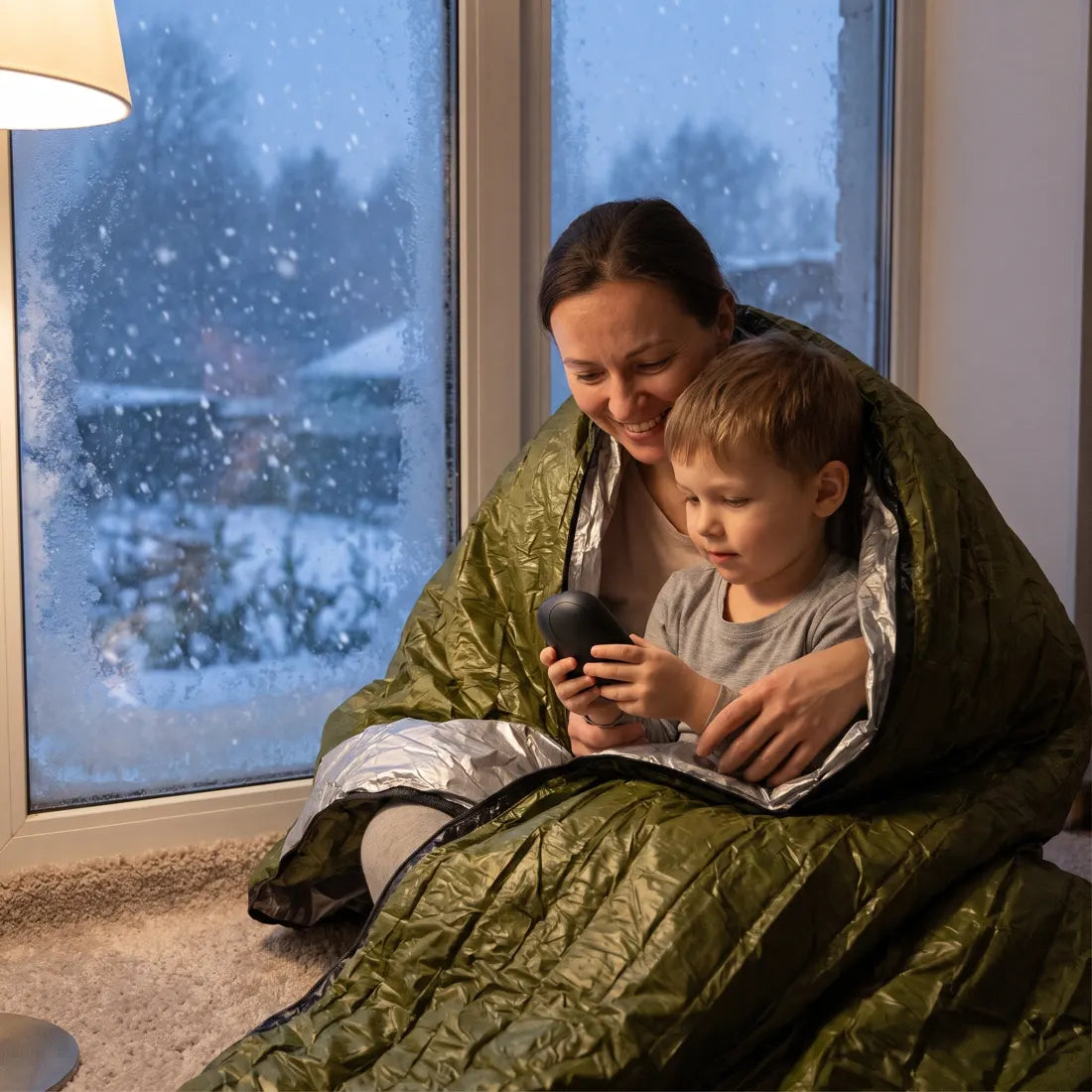
Move everyone into one small room, close the doors to the rest of the house and put towels under the doors. Dress in layers with hats and socks. Our room-by-room plan is in how to stay warm without power.
If it is hot
Stay on the lowest floor, close the blinds on the sunny side and drink water often. If the house gets too hot, go to a place with air conditioning.
If someone depends on power
If anyone uses a powered medical device or medicine that must stay cold, call your doctor or medical device provider now, while your phone still works, and decide where you will go. Ready.gov advises that if the power is out for more than a day, you discard refrigerated medicine unless the label says otherwise.
Never use a gas stove or oven to heat your home, and never use a grill, camp stove or generator indoors. They make carbon monoxide, which you cannot see or smell.
Day two and beyond: stay or go?
If the power is still out the next day, it is time to look at the bigger picture.
- Sort the food: throw out anything that has been at 40°F or above for 2 hours or more. When in doubt, throw it out.
- Check on others: call older neighbors and anyone who lives alone.
- Find help nearby: communities often open warming or cooling centers and charging stations. Local radio and officials will say where.
- Decide to stay or go: the Red Cross advises leaving if your home is too hot or too cold, or if someone has medical devices that need power.
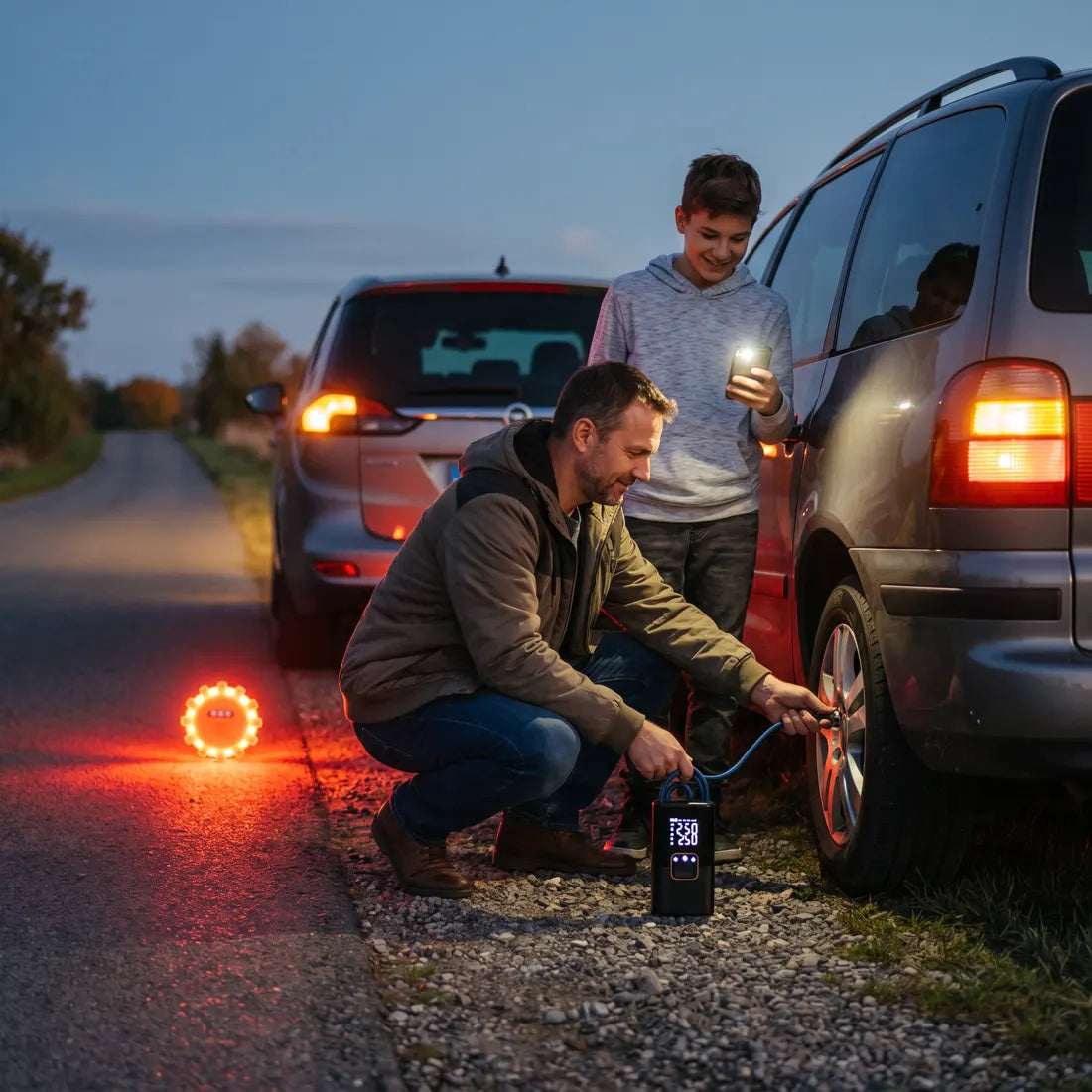
Keep your car's gas tank at least half full during storm season, as the Red Cross advises. If you need to leave on day two, you will not be looking for an open gas station with the pumps down.
Safety rules that never change

- Generators, camp stoves and charcoal grills: outdoors only, at least 20 feet from windows, doors and attached garages. Keep generators dry, let them cool before refueling, and connect appliances with heavy-duty extension cords.
- Carbon monoxide alarms with battery backup on every level of the home. Test them before an outage. See where to put a CO detector.
- Fallen power lines: stay at least 35 feet away from them and from anything they touch, and call 911.
- Floods: do not walk into flooded areas or use electrical equipment that may have been under water.
- Gas: turn off utilities only if you suspect damage or officials tell you to. Only a qualified professional can turn the gas back on.
Your printable power outage checklist

Get these ready before the next storm. Print this list and check it off.
Power outage checklist
Frequently asked questions
What should I do first when the power goes out?
Check if the outage is only your home, switch to flashlights, unplug electronics and keep the fridge and freezer closed.
Should I unplug things when the power goes out?
Yes. Unplug appliances and electronics so a surge does not damage them when the power comes back, and leave one light on so you know when it returns.
How do I charge my phone without power?
With a charged power bank, a solar charger or a hand crank radio with a USB port. Lower the brightness and close apps to make the battery last.
How long will food in my fridge last?
About 4 hours with the door closed. A full freezer lasts about 48 hours, a half-full one about 24.
Is it safe to use candles during an outage?
The Red Cross advises flashlights, not candles. Candles add a fire risk to a dark house.
When should we leave the house?
If the home gets too hot or too cold, or someone depends on medical devices that need power. Communities often open warming or cooling centers.
- First hour: flashlights, unplug electronics, fridge closed.
- First night: one warm (or cool) room, one charged phone, a radio for news.
- Generators, grills and camp stoves outside, 20 feet from windows. Never a gas stove for heat.
- Day two: sort the food, check on neighbors, leave if it gets too hot or too cold.
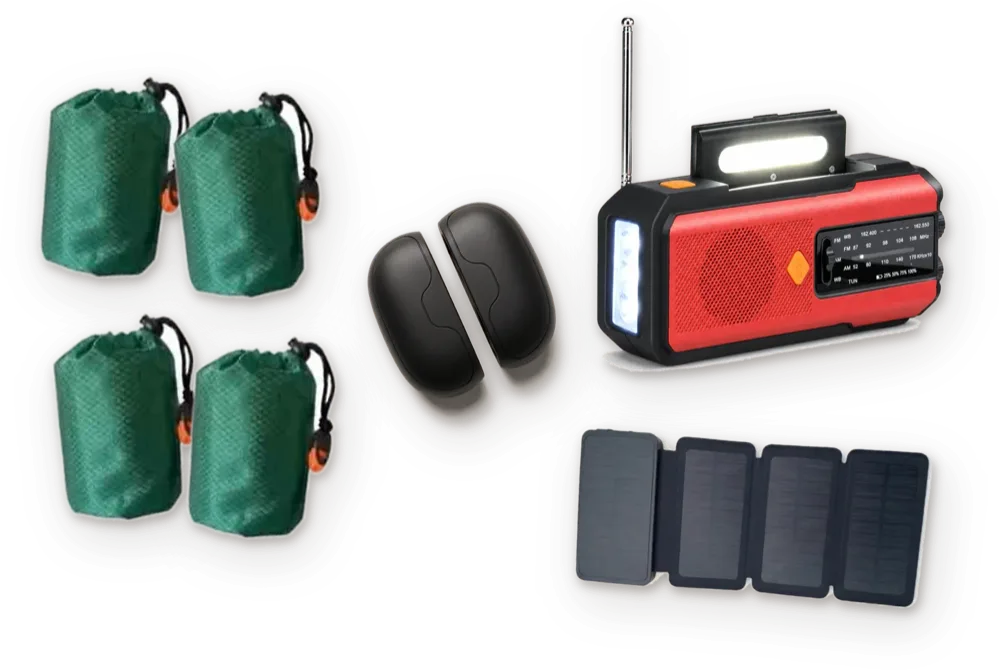
The Blackout & Winter Kit
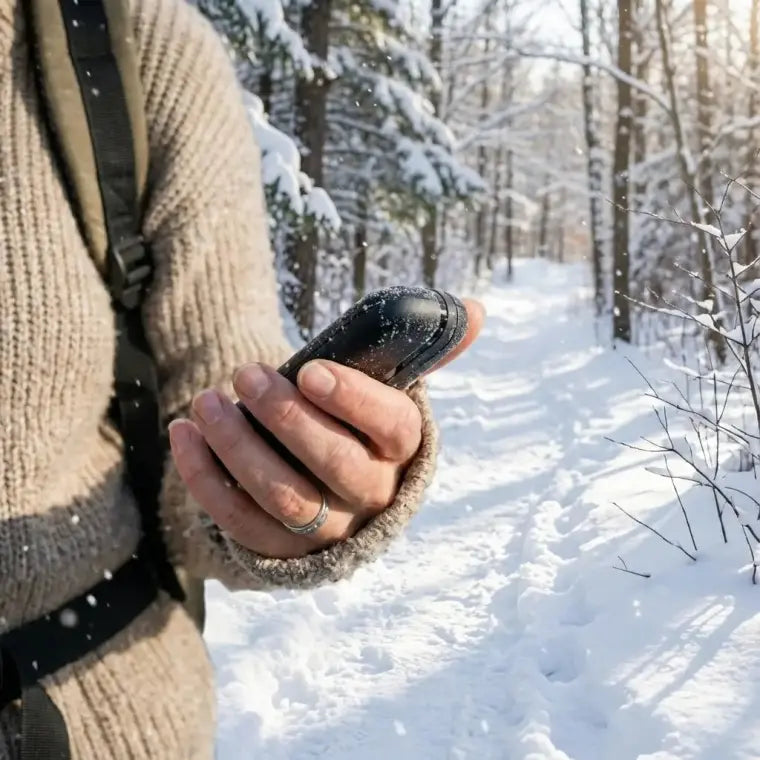
Heat, power, light and news for when the grid goes down: emergency sleeping bags, a pocket hand warmer, a solar power bank and a hand crank radio.
See the kitMore guides for your family
 What Is a NOAA Weather Radio, and Do You Need One?
 What to Keep in Your Car for Emergencies: A Printable Checklist by Season
 Stuck in Your Car in Snow: How to Stay Safe and Warm Until Help Comes

We write plain-English safety guides for families, checked against the official sources listed above. Trusted by 60,000+ families.

 ×
 ×
 ×
 ×